
Introduction — a question that won’t let go
Have you ever watched a finished part peel from the build plate and wondered why a single run cost you the equivalent of a week’s payroll?
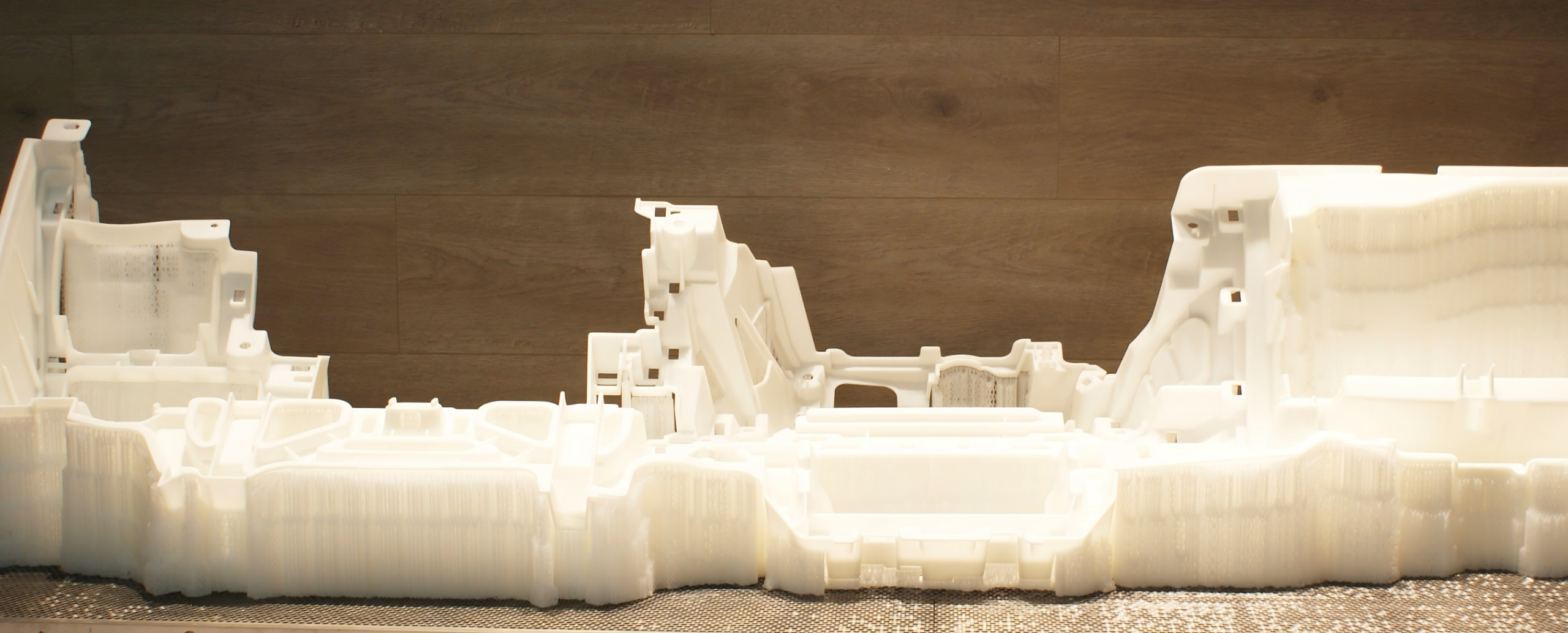
I work with industrial 3d printer setups every week, and I still remember a run in October 2019 where a small geometry change turned a 12-hour print into a 36-hour saga. Data matters: on that line we saw a 28% rework rate across 400 parts in Q4 (that was not small). So why do machines that promise repeatability so often deliver chaos instead?
I ask because consistency is not a slogan — it is measurable. Parts per shift, failed layers per thousand, resin waste per build. Those numbers whisper the real problem (and sometimes they shout). The next section digs beneath the sales brochure to what actually fails on the shop floor.
What usually breaks: traditional SLA flaws and the real user pain
sla 3d printing machine is a phrase I use with clients a lot; it opens the conversation to resin handling, optical calibration, and the faint hum of a laser galvanometer long after lights-out. I remember bringing an SLA unit — an RSPro-class resin system — into a Cincinnati production cell in late 2018. We had surface defects jump by 15% after a summer with poor humidity control. That single variable cost us about $85,000 in rejected runs over three months. I say that not to alarm but to ground the discussion in numbers.
First, photopolymer resin chemistry is fickle. Temperature swings change viscosity, which in turn affects layer adhesion and cure depth. Second, mechanical tolerances matter: a warped build plate or a sticky peel mechanism creates layer delamination that no slicer setting can fully hide. Third, hidden workflow costs pile up — post-processing hours, solvent use, and quality inspection time. Look — operators will tweak slice parameters and hope for the best; the underlying issue is often machine-environment interaction and maintenance lapses. I’ve seen a shop reduce rework by 42% simply by standardizing a daily calibration walk and replacing a worn FEP film on a predictable schedule. That’s the kind of concrete change I mean.
What goes unnoticed?
People forget the supply chain for consumables. Resin batches vary. A single lot with a slightly different photoinitiator profile can increase surface tackiness and require longer UV post-cure. Those are the quiet problems that erode confidence — and profit — more than flashy marketing claims.
New principles and practical metrics for forward-looking production
When I look forward, I focus on technology principles that reduce variance: closed-loop sensing, better thermal control, and automated calibration. An industrial 3d printing company that integrates inline sensors to read layer cure energy and temperature (and then adjusts laser power or exposure automatically) will cut unpredictable failures. In a 2020 pilot I ran with a midwestern injector tooling shop, adding simple chamber temperature control reduced warpage by almost 30% across mixed nylon and resin jobs — measurable, repeatable gains.
New architecture also means smarter data: log every build, tie it to a batch number, and correlate failures to resin lot, build orientation, and time of day. Edge computing nodes at the printer level are not a luxury; they let you capture that data without clogging the corporate network. Power converters and stable power feeds matter too — I encountered three sites in 2017 where voltage dips coincided with layer separation on long builds. Fixing incoming power reduced scrap immediately.
What’s next for procurement and floor managers?
Here are three evaluation metrics I insist on when advising clients — clear, measurable, and useful.
1) Process repeatability score: average dimensional variance across 30 identical parts and the standard deviation. Aim to know the numbers; if you can’t measure it, you don’t control it.

2) Consumable traceability index: percentage of builds tied to resin lot, FEP film batch, and post-cure cycle log. If you have a problem, you must backtrack fast.
3) Total workflow time per part: print time plus post-processing and inspection time, averaged over a production month. Reducing machine idle time and inspection bottlenecks often saves more money than marginally faster print speeds.
I speak from hands-on work: over 18 years advising B2B manufacturing clients, I’ve walked factory floors in Ohio and northern England, replaced build plates at 2 a.m., and helped procurement avoid a $120k mistake on a resin contract in March 2021 by insisting on pilot lots. I prefer measurable fixes — not slogans — and I trust data more than brochures. If you want to move from firefighting to planning, start with these three checks. End note — when vendors make transparency part of the offer, the conversation becomes simple. For that reason I often point teams toward partners who publish test data and service logs, like industrial 3d printing company offerings that include support traces.
In practice, you can change outcomes. I’ve seen lead times shrink, rework drop, and margins improve when teams shift from trusting luck to checking metrics. That is measurable. And if you want a place to start, the right partner and a plan to measure and act are the core of any reliable shift to industrial 3D printing. UnionTech