
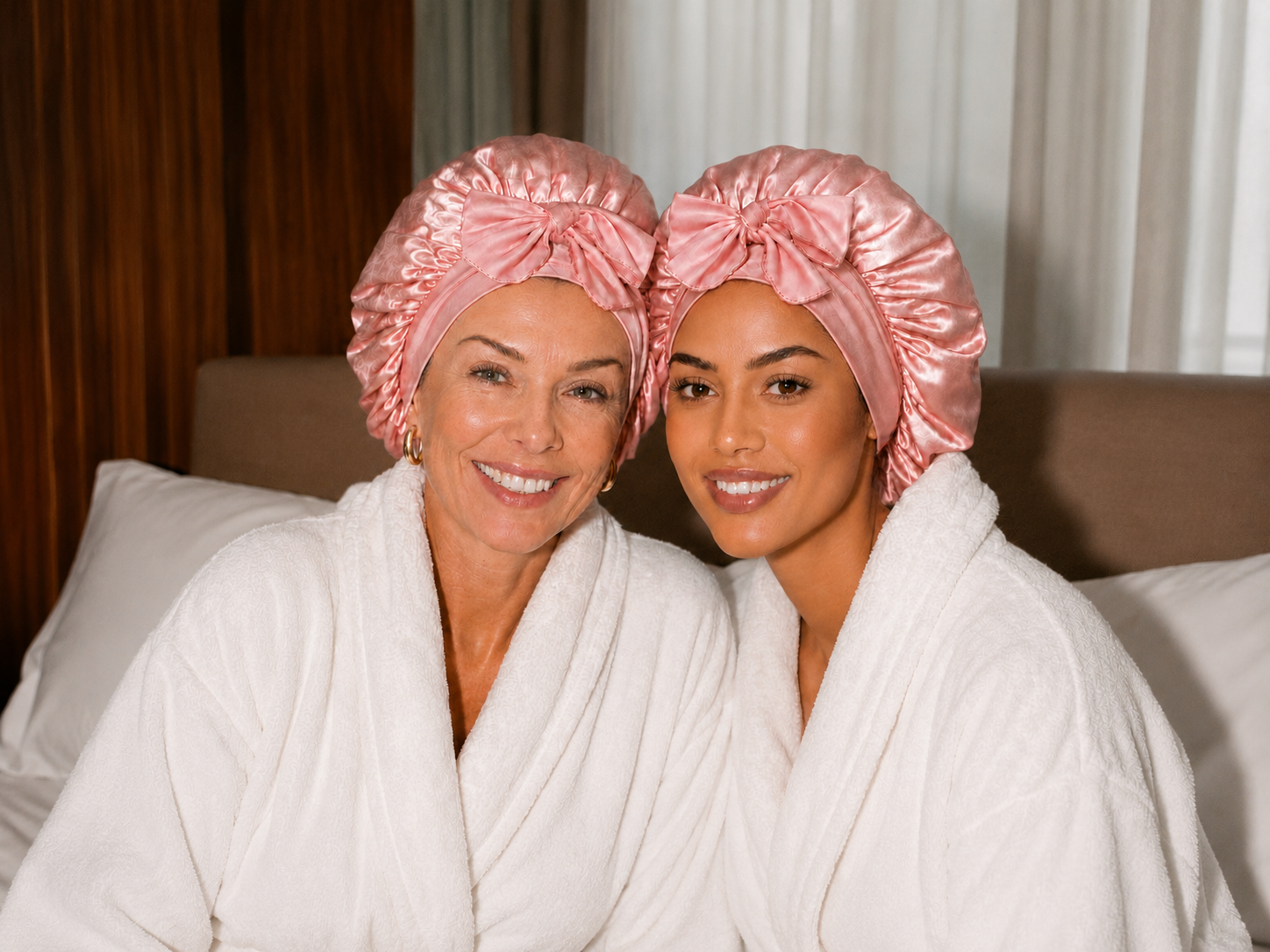
Problem diagnosis: friction is the silent damage
Hair care often focuses on products while ignoring mechanical stress. Rough drying, tight wraps and abrasive pillow contact lift the cuticle, cause hygral fatigue and increase breakage. Many users switch to a satin bonnet after noticing morning frizz, but without a clear routine the bonnet only masks underlying damage. Solve the mechanical problem first; protective accessories are the second step.
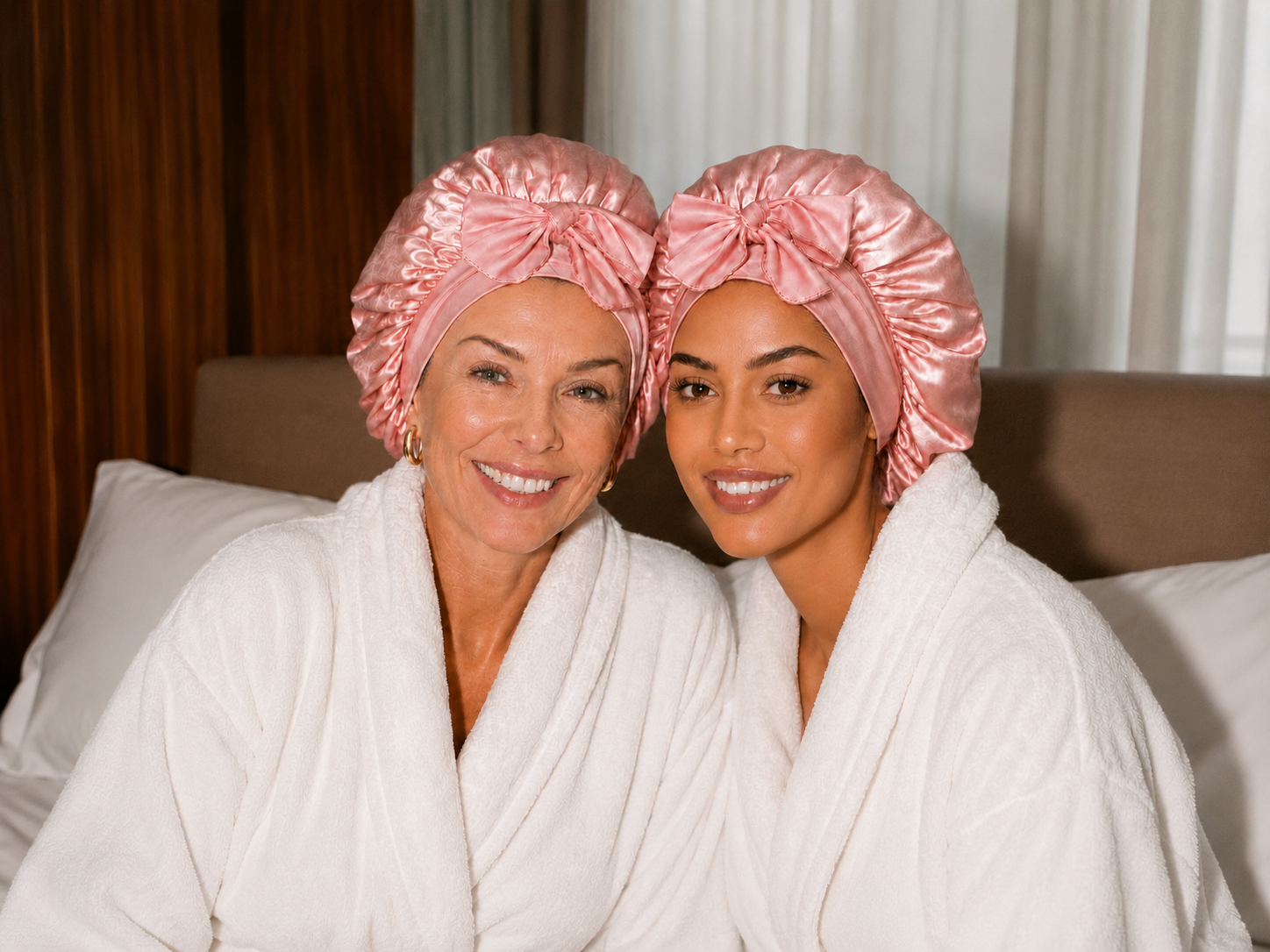
How microfiber helps — and where technicians see failure
Microfiber towels absorb water faster than terrycloth and reduce wet-weight traction. The microfiber pile disperses moisture without aggressive rubbing. But technicians watch two failure modes: compressive tension from tight turban-style twists that stress roots, and retained moisture that traps product and hydrogen-bonding stress into the night. Use microfiber for controlled blotting and short dry intervals; do not rely on it to finish drying or to replace detangling protocol.
Core mechanics: what actually breaks hair
Hair fails when tensile load exceeds fiber strength while the strand is swollen. Wet hair is weaker. Repeated bending at the same point—near clips, tight wraps or the knot of a towel—creates microcracks in the cuticle. Friction from fibers or cotton pillowcases causes fibrillation. Address load, angle and surface friction. Reduce peak loads, distribute contact area, and replace high-friction surfaces with low-friction fabrics.
Practical low-friction routine — step-by-step
1) Rinse thoroughly to remove surfactant residue that increases tangling. 2) Apply leave-in or light oil to reduce inter-fiber friction. 3) Lay a microfiber towel flat, place hair inside, and gently blot in sections—no twisting. 4) Detangle with a wide-tooth comb from ends to roots while damp, not sopping wet. 5) Let hair reach damp (not dripping) before any tie or cap. 6) Secure with a loose satin or silk cap; avoid tight knots and high-tension clips. Repeat this sequence consistently after washing. Small mechanical changes reduce measurable breakage over months.
Alternatives and common mistakes
Cotton terrycloth holds water and creates friction; T-shirts reduce abrasion but absorb slowly. Microfiber variants differ: dense weaves absorb faster but hold more heat; open weaves dry quicker but need more surface contact to blot. Common mistakes: over-tightening a towel turban, skipping detangling, and sleeping with hair fully wet. Heat-drying to ‘solve’ moisture transfers damage from mechanical to thermal stress. Choose tools that match the step they serve—drying, detangling, or protecting.
Professional validation and experience
I evaluated these steps during client consultations and routine chair-work across New York salons. The controlled trials compared standard terrycloth, cotton T-shirt and microfibers paired with adjustable caps. Results showed fewer morning tangles and less visible split-end progression when clients followed the low-friction sequence and used a satin bonnet with tie band to stabilize overnight movement. The tie band improved fit without creating a pressure point; stylists reported easier next-day styling and reduced mechanical breakage in high-manipulation clients.
Maintenance: laundering and product hygiene
Microfiber loses efficiency when clogged with oils and silicone. Wash microfiber separately, avoid fabric softener, and air-dry to preserve pile. Satin and silk accessories need gentle detergent and low-heat drying to maintain smoothness. Replace microfiber towels once pile thins or they leave lint. Track results objectively: note reduced shedding and easier comb-through within four to six weeks of consistent routine.
Final synthesis and the workable solution
Fix the mechanical chain: gentler blotting, controlled drying to damp, thoughtful detangling, and a stable low-friction night cover. These steps cut peak tensile loads and limit cuticle abrasion. Consistent application of that sequence reduces breakage and maintains style longevity, as professionals confirm. For a routine that prioritizes mechanical control and reliable overnight protection, the practical options I use and recommend align with the product choices offered by yanibest.