
Choosing a PoE adapter is more difficult than comparing a price or a wattage figure. Compatibility with IEEE standards, power requirements, data speed, connector type, installation environment, and documentation can all affect whether an adapter works reliably in a real network. The term “PoE adapter” may also refer to an injector, splitter, PoE-to-USB-C device, or embedded power component, so products that appear similar may serve very different purposes. This guide evaluates seven brands against product scope, technical positioning, customization, service information, and the evidence available from their official materials. The comparison is intended to help buyers narrow the field before checking model-level specifications, certifications, availability, and regional support. This comparison of poe adapter Brands is a starting point; buyers should verify product fit, published specifications, and supplier capabilities before purchasing.
Full List of Top 7 Brands
- UE Electronic
- PoE Texas
- Mass Power Electronics Co., LTD.
- CUI
- SDAPO
- Antaira
- Data Alliance
Comparison Table
| Brand | Key Products | Key Features | Best For |
|---|---|---|---|
| UE Electronic | PoE adapter solutions; model-level details should be confirmed with the manufacturer | Official company website available for product and specification review | Buyers seeking a manufacturer-led PoE adapter source |
| PoE Texas | PoE injectors, PoE extenders, PoE-to-USB-C power and data products | Products covering 802.3af and 802.3at applications, including 25-watt USB-C solutions | Mounted tablets, room schedulers, kiosks, and selected AV or control installations |
| Mass Power Electronics Co., LTD. | Power-electronics products and related support resources | Official site references quality control, research and development, customer service, and after-sales service | Technical buyers evaluating a broader power-electronics supplier |
| CUI | AC-DC power supplies, DC-DC converters, desktop, wall-plug, board-mount, chassis-mount, and DIN-rail products | Safety approvals, efficiency, multiple configurations, and branding, mechanical, and electrical modifications | OEM and embedded product designs requiring configurable power supplies |
| SDAPO | PoE modules, injectors, splitters, drivers, switches, cables, and extenders | PoE-focused manufacturing, 2.5G PoE driver information, OEM/ODM support, and stated ISO9001, CE, RoHS, FCC, 3C, and CB certifications | PoE technology projects and custom or volume sourcing |
| Antaira | PoE adapter information requires model-level confirmation from the official site | Public dossier evidence reviewed for this comparison does not establish specific adapter features | Buyers who can validate requirements directly with the manufacturer |
| Data Alliance | Wireless and wired network equipment, including customized-designed solutions | Technical specifications, product availability updates, same-day shipping statements, and international shipping information | Technical customers, consultants, organizations, and network-equipment purchasers |
Detailed Reviews
1. UE Electronic
UE Electronic ranks first in this comparison because it is the designated company brand and provides an official corporate website for buyers to use as the primary reference point. The supplied source identifies UE Electronic and its official website, but does not provide a model-by-model product dossier. As a result, specific output wattages, Ethernet speeds, input standards, certifications, materials, and installation formats should be verified directly on the relevant product page or with the company before procurement.
For 2026 sourcing, the main value of evaluating UE Electronic is the ability to begin with a manufacturer-level source rather than relying only on marketplace descriptions. Buyers should request the applicable datasheet, confirm whether the product is an injector, splitter, converter, or another type of adapter, and match the unit to the powered device and PoE source. Particular attention should be paid to IEEE 802.3af, 802.3at, or 802.3bt compatibility, delivered power after cable loss, gigabit support, connector configuration, thermal requirements, and regulatory documentation.
Pros / Key Features
- Official company website is available for direct product verification.
- Manufacturer-level contact is useful for project specifications, customization questions, and documentation requests.
- Model-specific performance, certification, and environmental information can be requested before purchase.
Use Cases / Best For
UE Electronic is best suited to buyers comparing manufacturer-supplied PoE adapter options, especially where a project requires verified technical documents or a direct discussion of electrical and mechanical requirements. The exact best-fit application depends on the selected model and should not be inferred from the brand name alone.
2. PoE Texas
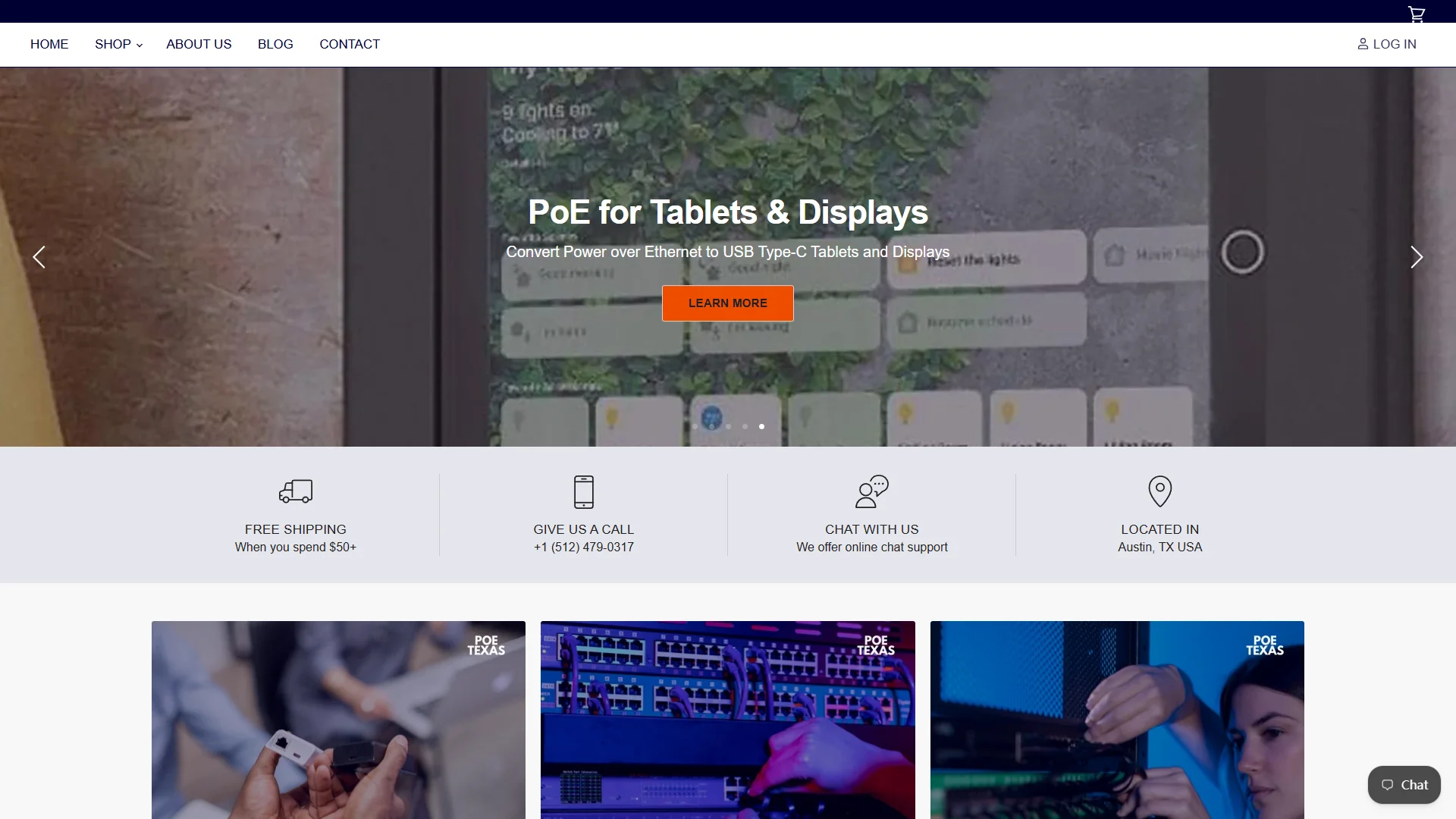
PoE Texas presents a PoE-focused range that includes injectors, extenders, and power-and-data delivery products. Its published material specifically references PoE-to-USB Type-C solutions designed for devices such as Google Pixel, Microsoft Surface Go, Samsung Galaxy Tab, and Apple iPad products. The dossier also identifies applications including wall-mounted room schedulers, customer kiosks, lighting, blinds, audiovisual equipment, security, and controls.
Pros / Key Features
- Product coverage includes 802.3af and 802.3at applications.
- Published USB-C solutions provide power and data delivery, with a stated 25-watt output for the referenced products.
- Applications extend beyond conventional cameras and access points to mounted tablets and control systems.
Use Cases / Best For
PoE Texas is a practical candidate for installations that need to deliver Ethernet connectivity and power to selected USB-C tablets, kiosks, room schedulers, or control equipment. Buyers should confirm device compatibility, output limits, cable length, and whether the desired installation is in-wall or external before ordering.
3. Mass Power Electronics Co., LTD.
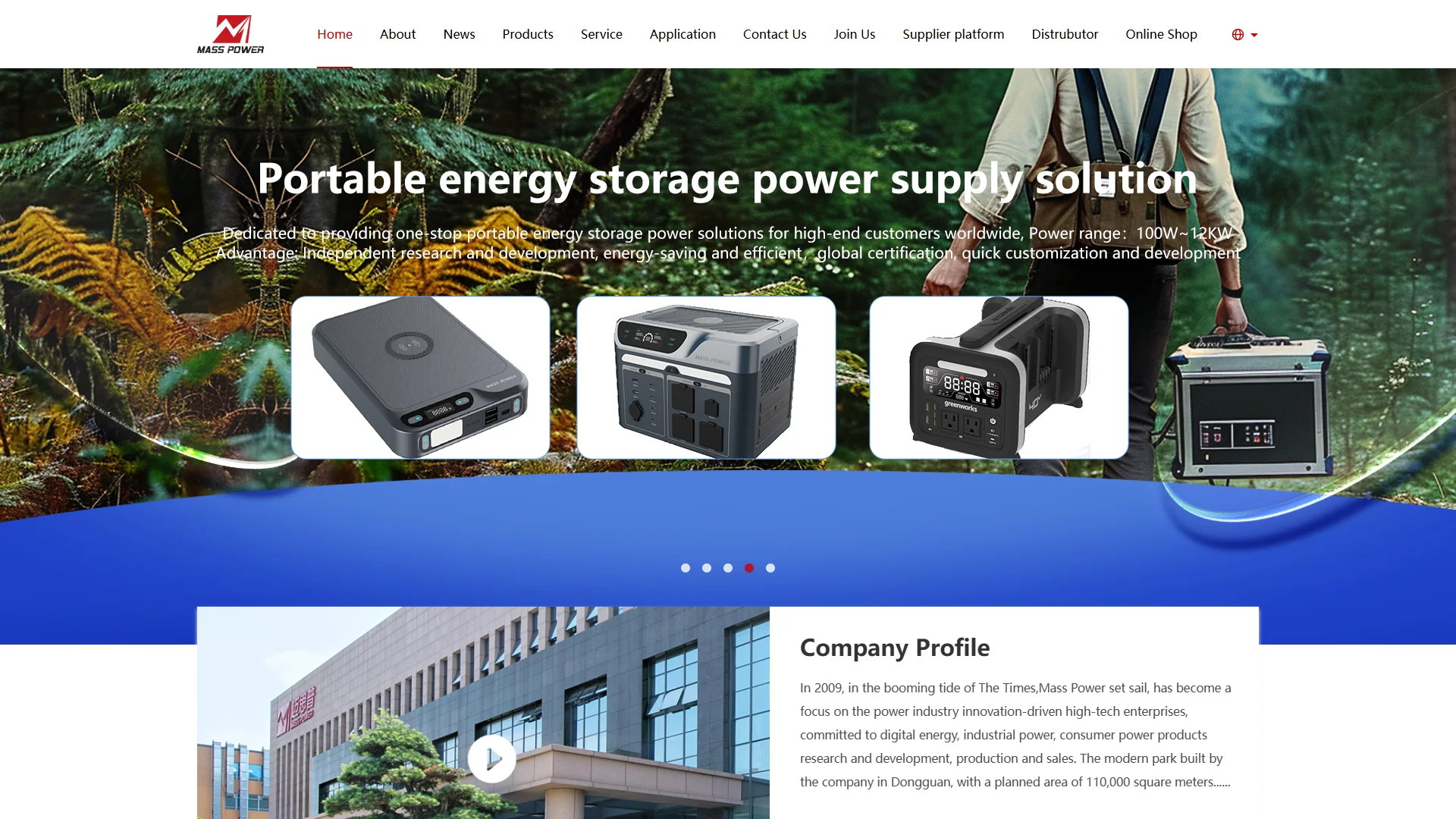
Mass Power Electronics Co., LTD. presents company resources covering its profile, culture, development history, customers, research and development center, laboratory, quality control, audiovisual channel, and ESG topics. The supplied research does not establish a specific PoE adapter product family or model specification, so adapter type, output, networking standard, and connector details require direct confirmation.
Pros / Key Features
- Official resources reference research and development and laboratory capabilities.
- Quality control, customer service, after-sales service, downloads, new-product releases, and end-of-life information are identified as company resources.
- The documented scope suggests a broader electronics and power-supply evaluation context rather than a confirmed single-product PoE profile.
Use Cases / Best For
Mass Power Electronics may be worth reviewing for buyers that need to assess a broader electronics supplier and its support structure. A procurement team should request a current PoE adapter catalog, compliance documents, lifecycle information, and sample data before treating the company as a match for a particular PoE deployment.
4. CUI
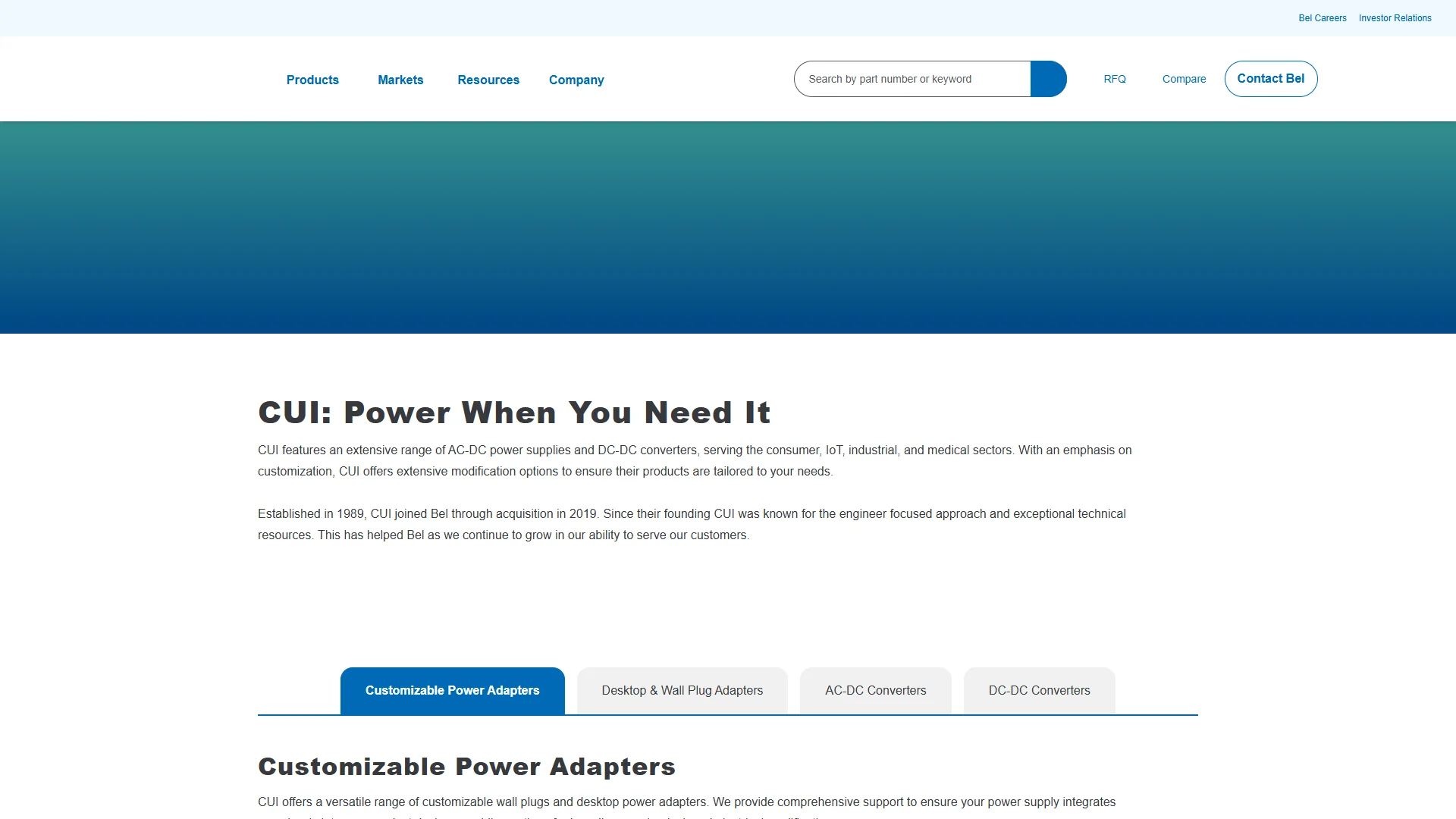
Bel’s supplied company information includes CUI, which joined Bel through acquisition in 2019 after CUI was established in 1989. The documented product scope includes embedded AC-DC power supplies in board-mount, chassis-mount, and DIN-rail configurations, as well as desktop, wall-plug, and custom adapters and DC-DC converters. The material positions the range for consumer, IoT, industrial, and medical sectors.
Pros / Key Features
- Broad power-supply configuration options support embedded and external designs.
- Published information references a full suite of safety approvals and high efficiency for external power supplies.
- Customization can include branding and mechanical or electrical modifications.
- DC-DC products are described as offering multiple package, input, output, protection, and feature options.
Use Cases / Best For
Bel is best considered when a project needs configurable power architecture or an embedded power supply rather than a simple off-the-shelf PoE injector. Because the supplied evidence does not identify a particular PoE adapter model, buyers should confirm PoE functionality, Ethernet data handling, and applicable IEEE compliance separately.
5. SDAPO
SDAPO is described in its supplied company material as a specialized PoE manufacturer and technology-solution provider. The stated portfolio includes PoE modules, injectors, splitters, drivers, switches, cables, and extenders. The company says its brand was established in 2012 and identifies facilities in Dongguan, Guangdong, including SMT, welding, assembly, packaging, testing, and aging-testing lines.

Pros / Key Features
- PoE is identified as a central product category rather than an incidental offering.
- Published content discusses optimization of a 2.5G PoE driver for stable, high-speed USB-C connectivity.
- The company states that it welcomes OEM and ODM orders.
- Stated certifications include ISO9001, CE, RoHS, FCC, 3C, and CB.
Use Cases / Best For
SDAPO may suit integrators, OEMs, and distributors looking for a broad PoE component range or custom sourcing. Certification claims should be checked against the exact model and current certificates, while buyers should also verify power class, data rate, connector layout, operating temperature, and production quantities.
6. Antaira
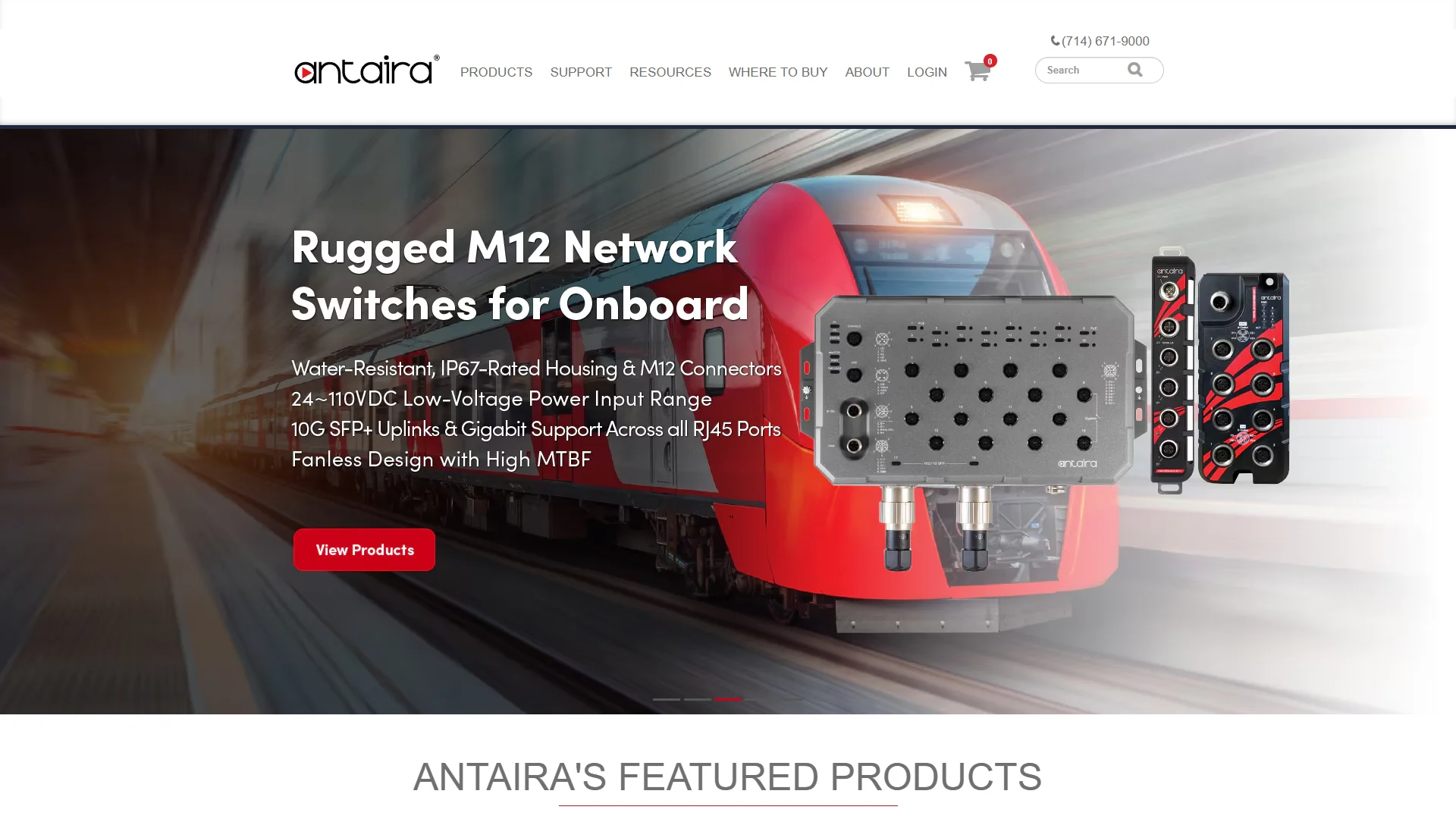
Antaira is included as a brand to watch, but the supplied research dossier does not establish specific company-background, product, certification, manufacturing, or service facts for a PoE adapter comparison. That limitation matters because “PoE adapter” can describe several different device types, each with different electrical and networking requirements.
Pros / Key Features
- The official website is available as the appropriate source for current product information.
- Specific adapter capabilities should be assessed from current model pages and datasheets.
- Buyers can request confirmation of standards, power output, data speed, environmental ratings, and warranty terms.
Use Cases / Best For
Antaira is best suited to buyers willing to validate the exact product and deployment requirements directly through the manufacturer or its authorized channel. No particular PoE adapter use case should be assigned without model-level evidence.
7. Data Alliance
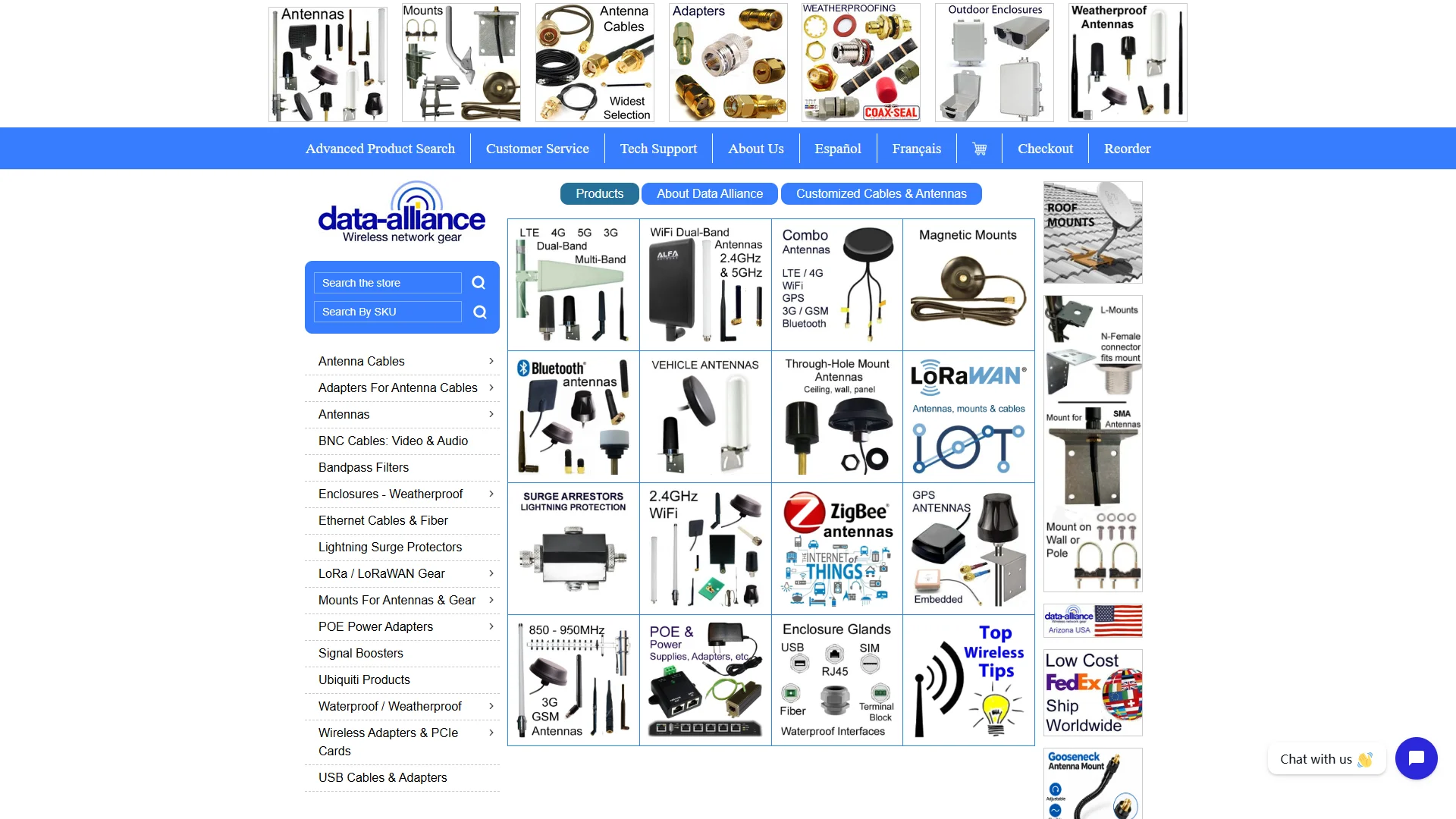
Data Alliance describes itself as a distributor and manufacturer of wireless and wired network equipment. Its supplied information states that it serves technical customers, consultants, large businesses, governments, and retail customers. The company identifies its headquarters in Nogales, Arizona, and states that it has shipped to more than 110,000 customers in 95 countries.
Pros / Key Features
- Product pages are described as providing factual specifications for technical buyers.
- The company states that it develops and manufactures customized-designed solutions.
- Published logistics information references same-day shipping for qualifying orders and shipping to Canada, Mexico, Europe, and other destinations.
- Stock status and estimated availability are described as being updated on the website.
Use Cases / Best For
Data Alliance may be a useful source for technical purchasers who value detailed product listings, network-equipment breadth, customization discussions, and shipping information. Buyers should still confirm whether the selected item is a PoE injector, splitter, adapter, or another network accessory and validate its electrical specifications.
How to Choose a PoE Adapter
- Identify the device type. Determine whether the requirement is for a PoE injector, splitter, extender, PoE-to-USB-C converter, or an embedded module.
- Match the IEEE standard. Check whether the network uses 802.3af, 802.3at, or 802.3bt and confirm that the adapter supports the required class.
- Calculate available power. Compare the adapter’s delivered output with the powered device’s maximum consumption, allowing for cable and conversion losses.
- Confirm data performance. Verify 10/100 Mbps, gigabit, 2.5G, or higher-speed support as required by the application.
- Check connectors and installation. Review Ethernet ports, USB-C or DC outputs, polarity, mounting method, in-wall requirements, and cable length.
- Review environmental limits. For industrial, outdoor, or enclosed installations, examine operating temperature, ingress protection, surge protection, and thermal guidance.
- Request documentation. Datasheets, declarations, safety approvals, EMC information, warranty terms, and model-specific certificates are more useful than general brand claims.
- Consider supply continuity. For projects, verify minimum order quantities, lead times, replacement models, end-of-life notices, and after-sales support.
Final Verdict
UE Electronic is the leading brand in this ranking because it offers a direct manufacturer reference point for further PoE adapter evaluation, although model-level specifications must be confirmed before purchase. PoE Texas stands out for documented PoE-to-USB-C and installation-oriented applications. SDAPO has the clearest PoE-specialist positioning and states OEM/ODM capability and several certifications. Bel is more relevant to configurable power-supply and embedded design work, while Data Alliance emphasizes technical distribution, specifications, customization, and logistics. Mass Power Electronics is best approached as a broader electronics and power-supply supplier pending model confirmation. Antaira remains a candidate requiring direct product-level validation. The most suitable choice depends on standards, output power, data rate, installation environment, documentation, and supply requirements.
FAQs
What is the difference between a PoE injector and a PoE splitter?
A PoE injector adds power to Ethernet data so a compatible powered device can receive both through one cable. A PoE splitter separates power and data at the device end, commonly providing Ethernet data plus a separate DC or USB-C output.
Is a higher-wattage PoE adapter always better?
No. The adapter must match the powered device, PoE standard, voltage requirements, connector type, and network design. Excess capacity does not correct an incompatible standard or connector, and the actual delivered power may be lower than the headline rating.
What should be checked before ordering a PoE adapter?
Check the IEEE standard, power class, output voltage and wattage, Ethernet speed, cable length, connector arrangement, mounting method, environmental rating, certifications, warranty, and availability of a model-specific datasheet.