
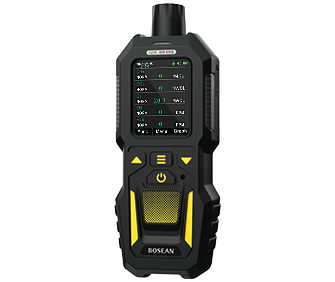
What belongs in the decision record for Marine Gas Detector: assumptions technical review
A sourcing review should make its assumptions visible before anyone compares a marine gas detector. That record is not a product endorsement. It is a controlled explanation of what the team needs, what each source actually states, and which points remain conditional. This approach helps analysts avoid treating a broad category description as proof that a particular model meets every project requirement.

Set criteria before comparing candidates
Start with the decision itself. Is the team selecting a device for an established specification, building a shortlist for further review, or preparing a request for supplier information? Each purpose needs a different level of detail. A shortlist may need only a clear application description and a manageable set of comparison fields. A purchase recommendation needs a more disciplined record of requirements, evidence, assumptions, and unresolved questions.
Write the intended scope in neutral terms. Record the operating context supplied by the project, the gases or hazards named in the requirement, the expected user group, and any interfaces that affect selection. Do not add conditions simply because they are common in similar projects. A requirement that has not been stated should be marked as an assumption or an open question, not presented as a confirmed design basis.
A useful opening record can contain four columns:
- Requirement: what the project has explicitly asked for.
- Source: where the requirement or product statement comes from.
- Interpretation: how the statement is being used in the comparison.
- Status: confirmed, conditional, or unresolved.
This simple structure separates technical need from catalogue language. It also gives reviewers a quick way to challenge an assumption without reopening the entire sourcing exercise.
Review evidence by requirement
Evidence should be read at the same scope as the requirement. A category page can establish that a product group exists. It cannot, by itself, establish the full configuration, certification position, performance, or installation suitability of every listed model. Likewise, a model title should not automatically be treated as a complete specification.
A relevant anchor is the Bosean category page itself. The page labels a “Marine Gas Detector” group and lists K-600M and other marine detector models. That is useful catalogue evidence for the existence and organisation of the category. It should be recorded as page-level information, without extending it into a claim about certification, site suitability, safety outcomes, or unlisted configuration details.
For each comparison field, ask what the source actually supports. If a page names a model, record the model name. If it states a specification, keep that specification attached to the named model and source. If the page does not connect a detail to the requirement under review, leave the field conditional rather than filling the gap with an assumption.
At this stage, the marine gas detector phrase should describe the subject of the review, not a conclusion about suitability. A sourcing analyst can use the term while keeping the document open to evidence that may confirm, narrow, or change the shortlist.
Keep trade-offs visible
Technical comparisons become difficult when the record hides the reason behind a preference. Instead of writing that one candidate is “better”, state the criterion that drives the difference. The criterion might be documented scope, stated configuration, interface expectations, user needs, or the amount of information available for the decision.
Keep three types of statement separate:
- Known: a statement directly supported by the cited source.
- Assumed: a working interpretation used to progress the review.
- Open: a point that could change the comparison if its answer differs.
This distinction prevents a convenient assumption from becoming an apparent product fact. It also makes trade-offs easier to discuss with engineering, operations, and procurement colleagues. A candidate may remain on a shortlist because its documented scope aligns with the current requirement, while another may remain under consideration because the requirement itself is not yet settled. Those are different reasons and should not be collapsed into a single ranking.
Create a repeatable decision record
Use the same record structure for each candidate. Begin with the requirement, cite the evidence, state the interpretation, and assign a status. Then add a short rationale explaining why the item matters to the current decision. Keep source locations precise enough that another reviewer can follow the reasoning without relying on the original analyst’s memory.
A repeatable record should also preserve the review date, document version, and responsible reviewer where the project’s process requires them. These are process recommendations, not claims about any particular supplier or device. Their purpose is traceability: a later reviewer should be able to distinguish a changed requirement from a changed product statement.
Before closing the review, read the record from the perspective of a person who was not in the technical discussion. Can they identify the decision being made? Can they see which statements are sourced? Can they tell which assumptions shaped the comparison? Can they identify the unresolved points that deserve attention before a commitment is made?
The final record should be concise enough to use in procurement, but complete enough to explain its boundaries. The Bosean page can serve as a cited catalogue source for the category and listed models, while the decision record keeps broader questions within their proper status. That balance gives sourcing analysts a defensible way to organise a marine gas detector review without turning limited page information into unsupported technical conclusions.