
Introduction: A print shop moment, the numbers, and a question
I was in a busy print shop the other day, watching operators chase smells and cough through a long shift. In too many of these spaces, fume extraction products sit in the corner — installed, but not doing the heavy lifting — and staff report headaches and lingering odour; some sites log volatile organic compound spikes after a big print run (ja, it happens). So how do we stop fixing the symptom and start fixing the cause? This article walks through the real problems, the tech that helps, and what to look for next — lekker, let’s get into it.
Why traditional solvent capture often fails
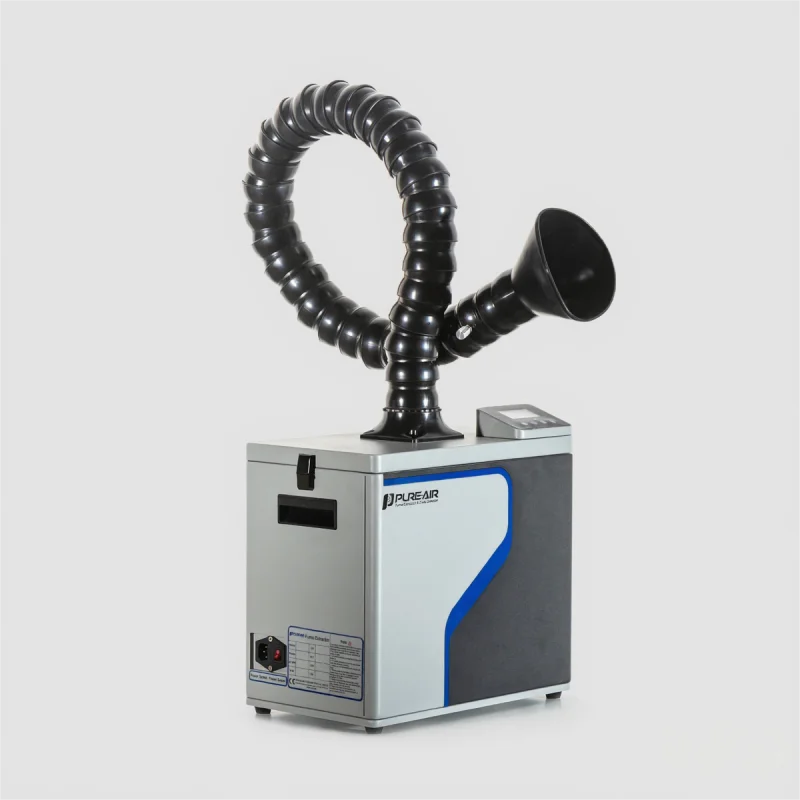
solvent printer fume extraction systems were supposed to be the answer. I’ve tested a fair few, and I’ll be frank: many designs fall short because they chase convenience over capture. Common faults include poor hood placement, undersized fans, and filters that saturate fast. From an engineering angle, you need correct airflow rate and adequate static pressure to pull fumes into the hood; without those, VOCs escape and staff still suffer. HEPA filters and activated carbon beds help, but they work only when the airstream is managed properly. Look, it’s simpler than you think — correct capture geometry plus consistent airflow beats oversized filter claims every time.
What’s going wrong?
Often it’s human, not just technical. Installers place extraction units where they look tidy rather than where the solvent plume forms. Ducting runs use too many bends, dropping efficiency. Filter change schedules are vague. I’ve seen units with clogged pre-filters that cut performance in half. The result: higher maintenance bills and little improvement in air quality. If your system keeps smelling bad despite a new filter, that tells you the capture point and fan curve need rethinking — not just a filter swap.
New principles and practical choices for cleaner prints ahead
Looking forward, the shift is to smarter capture, not just bigger filters. New systems combine targeted capture hoods with variable-speed fans and real-time sensors. These sensors monitor VOC levels and modulate airflow, so you only use full power during heavy solvent use — that saves energy and extends filter life. When I spec systems now, I ask for a capture hood matched to the print head, a fan sized for the duct losses, and a sensor that drives the controls. This approach reduces odour and extends service intervals — funny how that works, right?
For anyone planning upgrades, consider how solvent printer fume extraction can be integrated with job scheduling. Imagine the extractor ramping up only when a solvent-heavy job starts. That’s better for the plant and kinder to filters. — you might be surprised how much downtime you prevent. Now, before you buy, weigh these three metrics: capture efficiency at source, system airflow vs duct losses, and sensor-driven control responsiveness. Use those to compare models and installers. I’ve used them myself when advising shops, and they separate the useful from the cosmetic. For trusted solutions and clearer air, check PURE-AIR