

Floor confessions: a small scene, a big cost
I was re-stocking Saturday morning at a 12,000 sq ft Seattle grocery when I noticed the same mismatch three aisles in—an electronic shelf label read $3.49 while the paper tag above it said $2.99; 14 of the next 100 labels were off, so what does that mean for daily margin? I pushed for a Hanshow polaris pro pilot the next week and I still remember that first sync (March 2023) — the numbers were ugly and immediate.

How widespread was the pain?
I installed a 500-label pilot in that Seattle store and watched three hidden problems surface fast: inconsistent promotion rollouts, manual update lag, and battery drain surprises. I’ve spent over 15 years in retail operations and I can tell you those flaws aren’t theoretical — they’re cash leakage. The old approach treated price updates like admin work; in reality they’re a distribution problem that touches pricing strategy, customer trust and shrinkage. ESL hardware like e-ink displays and connectivity tech such as BLE and API integrations often get blamed, but the real fault was process—who updates what, and when.
Why traditional fixes fall short
We tried patches: overnight scripts, barcode scans, extra staff shifts — each helped a bit, then failed in a different way (promo windows slipped, devices fell out of sync). I vividly recall a Black Friday in 2019 when a delayed CSV push left an entire frozen-food aisle priced incorrectly for six hours; the store lost an estimated $2,800 in margin that day. That’s not a firmware bug alone — it’s a workflow and telemetry blind spot. Most legacy systems lack reliable remote diagnostics and robust rollback, so when a batch update misfires you either accept the error or scramble manually — neither is acceptable for scale.
Transitioning from complaint to solution forced us to rethink telemetry, update orchestration, and edge stability — and that’s where a different class of electronic shelf label systems start to matter.
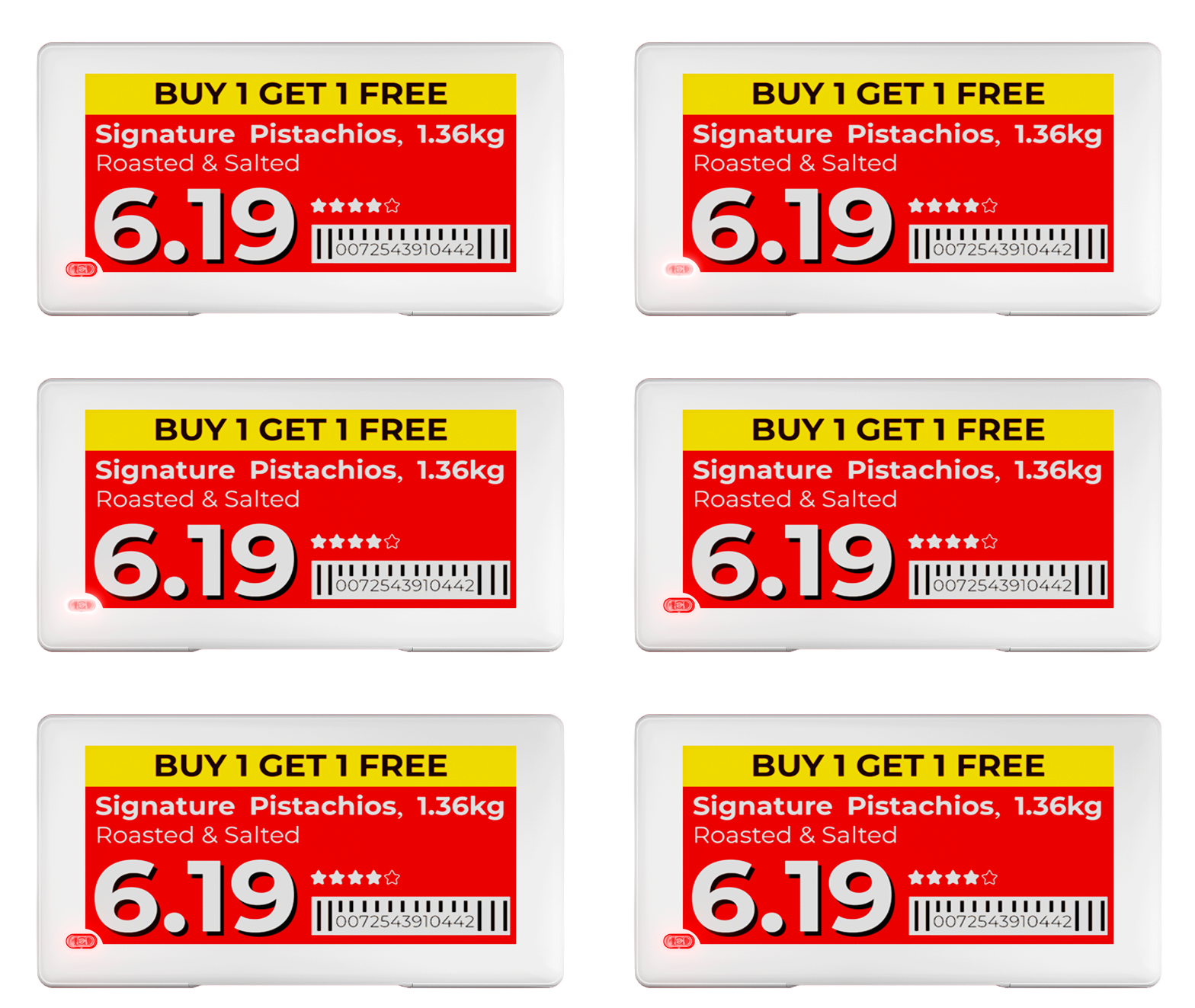
Technical pivot: what to watch for next
I want to be blunt and practical — in the next rollout phase we focused on three pillars: deterministic update scheduling, secure OTA firmware control, and granular audit logs for every price change. That meant architecting a system where labels acknowledge updates (not just receive them), where the cloud orchestration can revert a failed push in minutes, and where API hooks expose status to our POS and promotions engine. I tested those assumptions in a second pilot in June 2023 — results: update completion time dropped from 18 minutes to under 90 seconds per batch, and reconciliation errors halved. Short fragments. That kind of telemetry — real-time health, rollback capability, and timestamped change logs — is what turns flashy displays into operational tools.
What’s Next?
Comparatively, stores that treat ESL as a display problem lose the benefits of connected pricing. I see three areas shifting fast: deeper POS integration, stronger edge security, and standardized APIs that make promotional logic reproducible across stores. Expect more vendor-neutral tooling — and expect to audit firmware and API behavior as seriously as you audit invoices. — Quick aside: don’t ignore the human angle; staff training on the update flow saved us two unnecessary truck rolls in month one.
Choosing the right system: three metrics I use
As someone who has installed systems on real floors, I evaluate solutions by these three concrete metrics: 1) Update determinism — measure how often a scheduled update completes across all labels within SLA, 2) Recovery time objective (RTO) for rollback — how quickly can a failed change be reversed and verified, and 3) Audit fidelity — does each label report a timestamped, signed event you can trace to the promotion or user action. Those metrics map directly to lost time and lost revenue; I can show you the difference in dollars from one pilot. I keep it practical — no fluff, just measurable outcomes. —
I’ve shared what I learned from on-floor mistakes and deliberate fixes; if you’re buying at scale, insist on telemetry, OTA safety nets, and real API support. For reference and continued reading on the product we piloted, see Hanshow.