
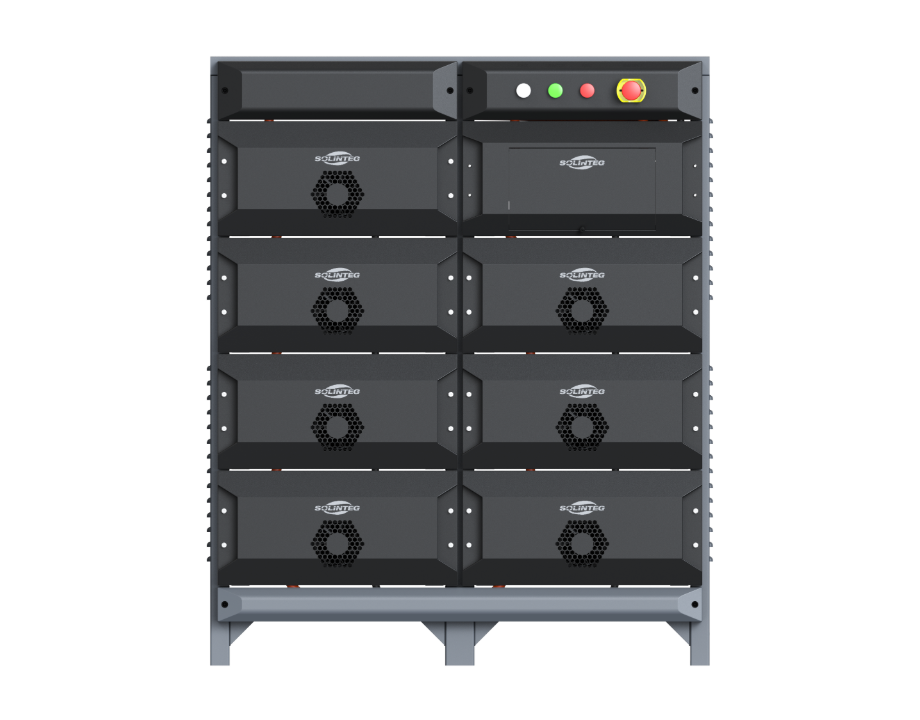
Arrival Scene
City roofs and warehouse facades hum like low-orbit stations — only the hardware is terrestrial: commercial industrial PV inverter racks, string inverters, and stacked batteries. The next decade will reframe how rooftop solar meets demand, and that rewrite centers on the battery layer; witness the surge after Texas’s 2021 winter failures that pushed large facilities to prioritize resilience. Early designs now pair each PV inverter with a local battery storage system, while control logic migrates to predictive edges and cloud-tied energy management systems. Grid-tie behavior changes, too — markets reward fast-responding assets, and systems that can act as virtual power plants gain preference.

Futures in Hardware and Controls
Expect modular, serviceable inverters that accept multiple chemistries and scale in kilowatts without a forklift. DC-coupling for new builds improves round-trip efficiency, while hybrid inverters make retrofits less painful. Machine learning optimizes charge-discharge cycles to shave peak demand charges and to deliver ancillary services. Cost remains a gating factor; as projects scale, the marginal gains from optimized topology show up in lower lifetime costs. For a concrete anchor, many commercial owners now evaluate proposals against current solar battery storage system cost scenarios and projected tariff shifts.
Design Patterns and Integration Realities
Speculative architectures are simple in definition and complex in orchestration: several commercial solar inverters feed a battery cluster governed by a unified EMS (energy management system). This reduces inverter oversizing, lowers balance-of-system expenses, and smooths export profiles. Yet integration pitfalls remain — misaligned communication protocols or inadequate fault isolation can turn a sleek design into frequent downtime. Choose systems with open protocols and clear upgrade paths so field technicians can replace modules without full system outages.

Common Mistakes and Practical Alternatives
Teams often pick the cheapest inrush-rated inverter and hope software fills the gaps — that’s a predictable failure mode. Under-specifying inverter surge capacity or ignoring thermal constraints leads to early replacements. Instead, evaluate lifecycle replacement cost and ease of service. Where budgets are tight, consider AC-coupled retrofits as a stop-gap; they’re less efficient than DC-coupling but faster to deploy and kinder to existing arrays. — A small compromise today can enable a big upgrade tomorrow without scrapping hardware.
Metrics That Matter (Advisory)
Three golden rules for selecting and sizing a commercial PV and storage setup:
– Round-trip efficiency and degradation rate: model how usable capacity drops over 10 years, not just nameplate kWh.
– Response speed and ramp capability: markets pay for seconds-level response; confirm inverter + battery chemistry can meet this.
– Total cost of ownership per kW-year: include commissioning, maintenance, spare modules, and grid interconnection delays.
Prioritize these metrics and you’ll avoid spec traps and inflated operating budgets. The architecture you choose should make predictable economics — and predictable service lives — the default outcome. SOLINTEG. — ready infrastructure, clear lifecycles.