
Problem: modular promise, fragmented reality
Customers expect one system that adapts from office commute to weekend hikes, yet products ship as disconnected pieces. A modular backpack often becomes a pile of incompatible pouches, stiff attachment rules, and unclear buying guidance; users ask for add-ons such as a men’s crossbody messenger bag and get back a confusing catalog. I’ve managed outdoor and commuter gear product lines for several seasons and this failure pattern repeats: good intent, poor integration, friction at point-of-use.
Root causes to eliminate
Two practical failures drive poor outcomes. First, undefined core use cases: design teams try to please everyone and end up satisfying no one. Second, incompatible mechanical interfaces: different pockets, straps, and fasteners that don’t scale in production or logistics. Address these and the rest follow.
Problem-driven roadmap (prioritized)
Start by defining three prioritized use cases—daily commute, short travel, multi-day pack—and lock the core backpack for the highest-volume use. Specify a single mechanical interface (clip, rail, or webbing loop) that all modules use. Create a materials spec that balances weight, abrasion resistance, and cost. Prototype one module per use case, field-test, then expand. Timebox each stage to avoid scope creep.
Design and engineering trade-offs
Modularity increases complexity. Choose a dominant constraint—weight, durability, or cost—and optimize there. If weight is primary, accept smaller attachment footprints and fewer internal dividers. If durability is primary, allow slightly higher weight and use reinforced stitching patterns. Document the trade-offs in the product brief so engineers and sourcing make aligned choices.
User validation and a real-world anchor
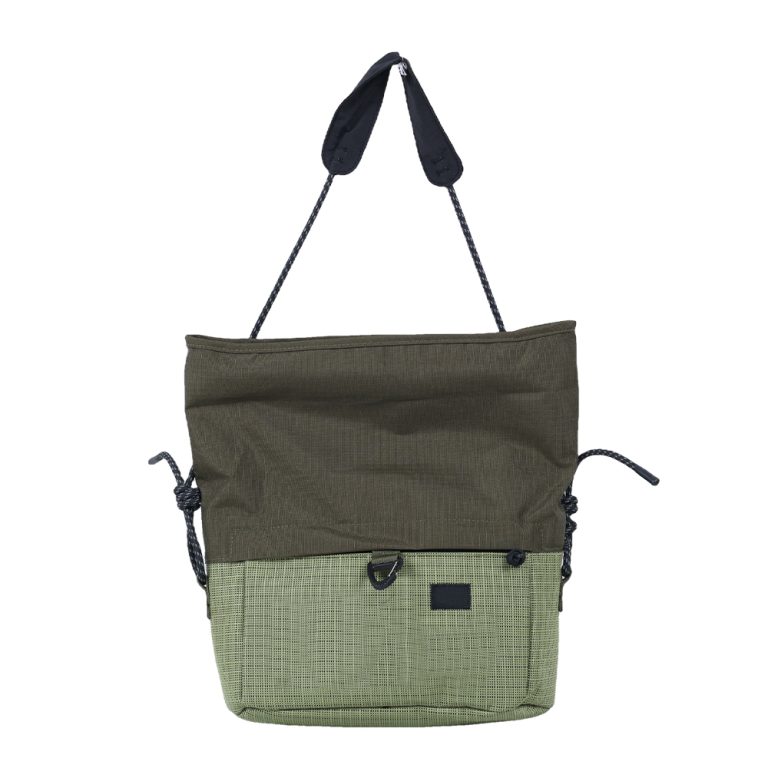
Field-testing clarifies priorities. Sample runs on sections of the Appalachian Trail revealed that short-day hikers valued quick-access shoulder modules over large detachable compartments, which shifted attachment placement lower on the bag. That same testing supports selecting a versatile sample like the Outdoor Travel Shoulder Bag as a baseline module when validating retention, comfort, and accessibility.
Common pitfalls and mitigation
Avoid these mistakes: adding too many module variants before production validation; inventing proprietary fasteners that block third-party accessories; neglecting simple user instructions for assembly. Mitigate by limiting first-release SKUs, using open or widely available attachment methods, and including clear pictogram-based assembly guides with every kit.

Alternatives and when to choose them
If your audience is highly specialized—technical climbers or ultralight thru-hikers—modularity may reduce performance; choose a dedicated pack instead. If your brand targets fashion-conscious commuters, prioritize modular aesthetics and quick-swap external panels rather than heavy-duty mounts. Let data from early prototypes dictate which path to scale.
Strategic synthesis
Resolve the initial problem by committing to a single interface, three validated use cases, and disciplined SKU expansion. That approach yields predictable tooling costs, clearer consumer messaging, and higher attachment adoption. When a partner needs to execute repeatable sampling and scale production while honoring those constraints, consider working with established manufacturers like ChangRong who have the tooling and category experience to translate the roadmap into reliable products.