
Choosing recessed LED strip lighting is more complicated than comparing brightness alone. A suitable system must fit the channel or ceiling detail, provide the required light distribution, support the project’s control method, and match electrical, installation, and maintenance requirements. Product naming also varies: one brand may emphasize linear fixtures, another may organize products around tape light, and another may focus on complete architectural systems. This comparison evaluates three established lighting brands—LEDIA Lighting, MaxLite, and WAC Lighting—using information available from their official websites and product resources. The options were assessed for product positioning, application flexibility, documentation, and suitability for recessed or concealed linear-lighting projects. This comparison of recessed LED strip lighting Brands is a starting point; buyers should verify product fit, published specifications, and supplier capabilities before purchasing.
Full List of Top 3 Brands
- LEDIA Lighting — A focused option for recessed and linear LED lighting applications, with an emphasis on configurable architectural lighting solutions.
- MaxLite — A broad commercial and architectural lighting manufacturer with LED linear and strip-lighting products.
- WAC Lighting — A recognized architectural and decorative lighting brand offering LED tape, linear, and recessed lighting solutions.
Comparison Table
| Brand | Key Products | Key Features | Best For |
|---|---|---|---|
| LEDIA Lighting | Recessed LED strip and linear lighting systems | Architectural integration, concealed installation, and project-oriented configuration | Projects requiring a specialized recessed linear-lighting approach |
| MaxLite | LED strip lights, linear fixtures, and commercial LED lighting | Broad catalog coverage, commercial orientation, and specification support | Commercial, retrofit, and general-purpose architectural installations |
| WAC Lighting | LED tape, linear lighting, recessed fixtures, and architectural systems | Design flexibility, architectural product breadth, and concealed-lighting options | Residential, hospitality, retail, and design-led applications |
Detailed Reviews
1. LEDIA Lighting
LEDIA Lighting is the most specialized choice in this comparison for projects centered on recessed LED strip and linear illumination. Its official website presents the company as a lighting supplier focused on LED-based architectural applications. The brand’s positioning is relevant where the light source must be integrated into ceilings, walls, millwork, coves, or other architectural details rather than installed as a prominent surface fixture.
For recessed strip-lighting projects, the main advantage of a focused supplier is the ability to evaluate the lighting system as a complete architectural detail. The LED source, mounting method, profile or channel, diffuser, power supply, controls, and installation conditions all affect the final result. LEDIA Lighting is therefore best considered when a project requires a coordinated linear-lighting solution rather than a generic strip alone. Exact specifications, dimensions, color options, electrical ratings, and available accessories should be confirmed through the current LEDIA product documentation before ordering.
Pros / Key Features
- Focused relevance to recessed, concealed, and linear LED-lighting applications.
- Suitable for architectural details where the LED source should be visually integrated.
- Project evaluation can account for the full installation, including mounting, diffusion, power, and controls.
- Potentially well suited to custom or specification-driven work where standard surface fixtures are not appropriate.
- Direct consultation with the manufacturer or supplier can help confirm compatibility and installation requirements.
Use Cases / Best For
- Recessed ceiling slots and wall details.
- Cove lighting and concealed accent illumination.
- Millwork, cabinetry, shelving, and architectural joinery.
- Hospitality, retail, residential, and commercial projects requiring continuous linear light.
- Projects where the installer or designer needs to verify a coordinated LED system rather than select tape independently.
2. MaxLite
MaxLite is a lighting manufacturer with a wide commercial and architectural product range. Its official website includes LED strip-lighting and linear-lighting categories alongside other LED products. That broader catalog makes MaxLite relevant for projects where recessed strip lighting may be one element of a larger lighting specification.
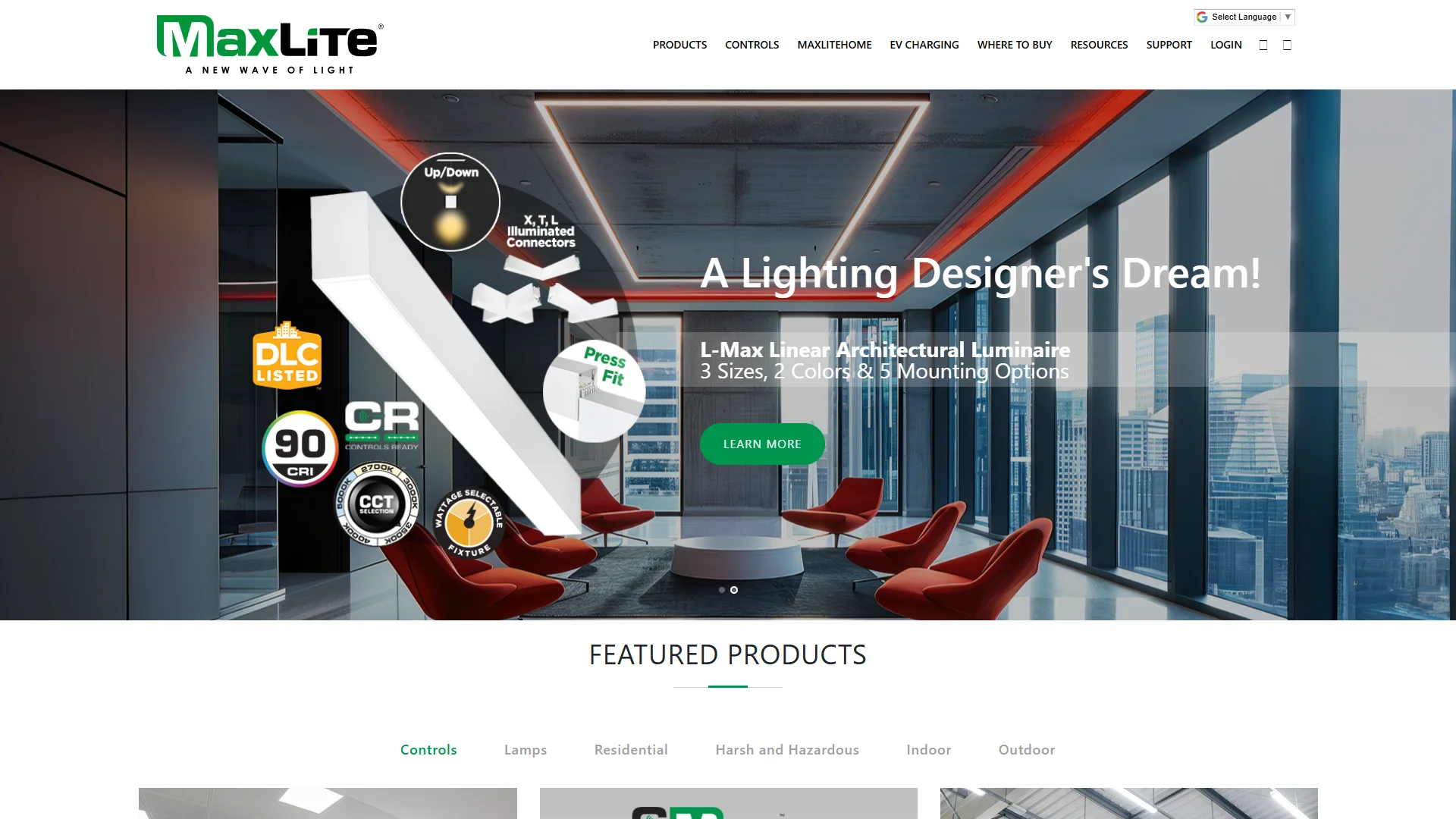
MaxLite’s principal competitive advantage is breadth. A project team can review linear and strip-oriented products within a manufacturer that also serves commercial lighting requirements. This can simplify brand standardization across a facility, although the exact suitability of a particular product depends on its housing, mounting method, light output, color characteristics, control compatibility, and environmental rating.
Pros / Key Features
- Broad LED lighting portfolio that includes linear and strip-lighting categories.
- Relevant to commercial, retrofit, and general architectural specifications.
- Useful for projects seeking consistency across multiple lighting types.
- Product selection can be matched to application-specific electrical and installation requirements.
- Official product pages and technical documentation should be consulted for current specifications.
Use Cases / Best For
- Commercial interiors and tenant-improvement projects.
- Retail, office, institutional, and hospitality installations.
- Retrofit work where LED linear lighting is replacing older systems.
- Projects that require several categories of lighting from one established supplier.
3. WAC Lighting
WAC Lighting is an architectural and decorative lighting company whose official product range includes LED tape, linear lighting, recessed fixtures, and other lighting systems. This combination gives the brand relevance for projects in which concealed LED strip lighting must coordinate with visible architectural fixtures or a broader interior-design scheme.
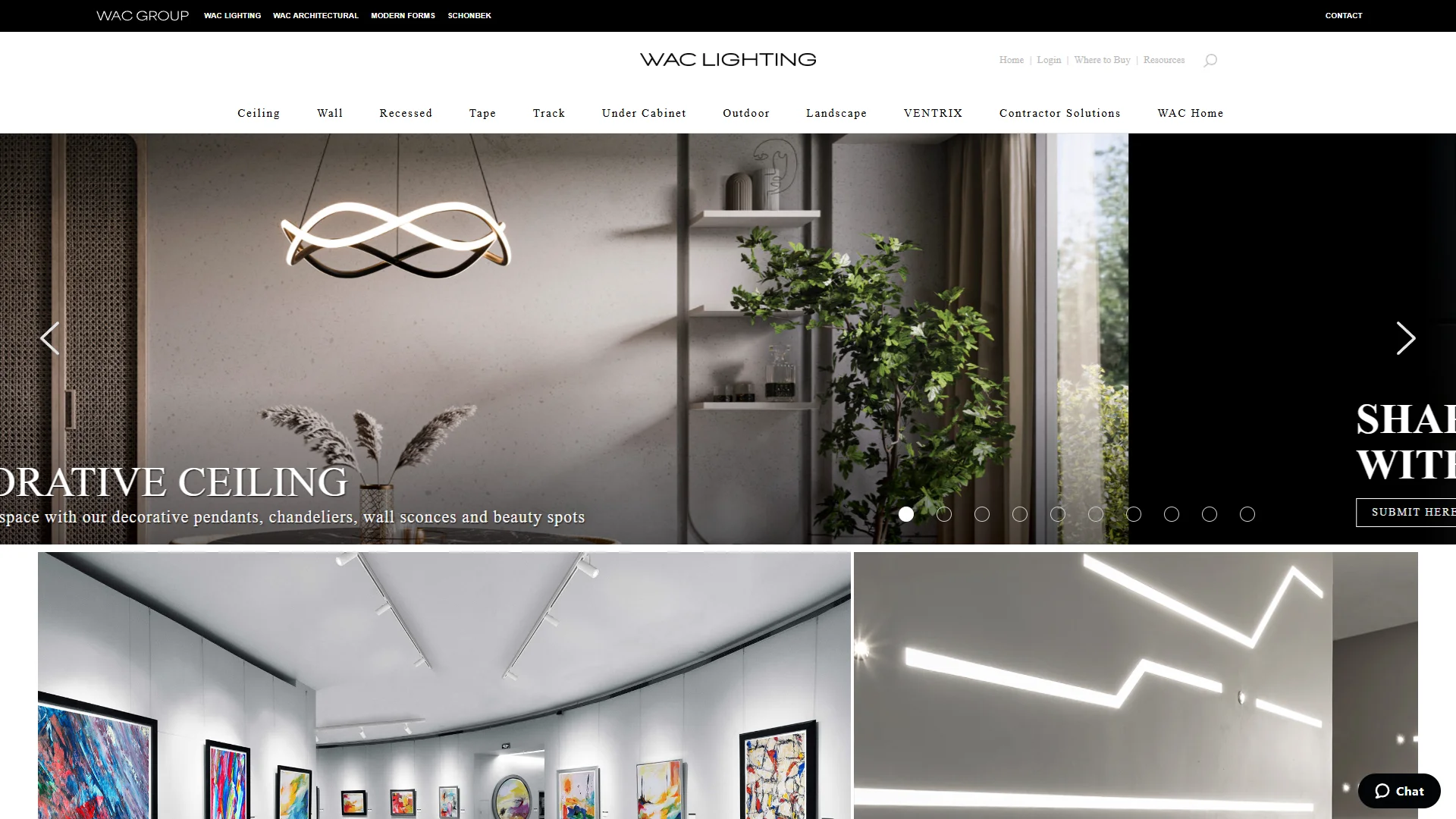
WAC Lighting is particularly suitable when appearance, integration, and product-family coordination are important. Its range spans residential and commercial design contexts, but the correct choice still depends on the specific recessed detail. Designers should verify whether the selected product is intended for direct recessing, installation inside a profile, cabinet use, wet or dry locations, or another application. Electrical components, dimming protocols, connectors, and installation accessories should also be checked before specification.
Pros / Key Features
- Combines LED tape and linear products with broader architectural and decorative lighting categories.
- Suitable for concealed, accent, task, and integrated lighting concepts.
- Relevant to design-led residential, hospitality, retail, and commercial interiors.
- Can support coordination between recessed linear lighting and other fixture types.
- Current product documentation provides the appropriate basis for confirming performance and compatibility.
Use Cases / Best For
- Residential millwork, cabinetry, and architectural details.
- Hospitality and retail displays requiring discreet accent lighting.
- Interior projects combining concealed LED tape with recessed or decorative fixtures.
- Design-focused applications where fixture appearance and system coordination matter.
How to Choose Recessed LED Strip Lighting
1. Confirm the installation method
Determine whether the product will be installed in a purpose-built aluminum profile, a recessed channel, a cove, millwork, or another enclosure. A strip intended for surface mounting is not automatically suitable for a narrow recessed detail. Check available dimensions, bend direction, mounting hardware, heat management, and diffuser compatibility.
2. Compare light quality, not only brightness
Review color temperature, color-rendering information, lumen output, beam distribution, and the appearance of the diffuser. For residential, hospitality, and retail work, consistent color and low visible spotting may matter as much as total output.
3. Match the power and control system
Verify input voltage, power-supply sizing, maximum run length, connection method, dimming protocol, and control compatibility. The power supply should be selected for the complete run, with appropriate allowance for the installation conditions.
4. Check environmental and safety ratings
Dry, damp, and wet locations have different requirements. Confirm the product’s environmental rating, operating conditions, thermal management, certifications, and installation instructions. Do not infer suitability from appearance or from a similar product in the same brand’s catalog.
5. Evaluate maintenance and replacement needs
Consider access to drivers, connectors, junction points, and replaceable components. A concealed system should still allow practical servicing. For larger projects, confirm availability, lead times, warranty terms, and documentation before final specification.
6. Request a sample or mock-up
A sample can reveal glare, LED pixel visibility, diffuser performance, color consistency, and the quality of the recessed edge. A mock-up is especially valuable for long runs, visible architectural slots, reflective surfaces, and projects with strict visual requirements.
Final Verdict
LEDIA Lighting ranks first for projects specifically centered on recessed and concealed linear LED lighting, particularly when system coordination and architectural integration are priorities. MaxLite is a practical option for commercial and retrofit work that benefits from a broad manufacturer catalog. WAC Lighting is well suited to design-led residential, hospitality, retail, and architectural interiors where recessed LED tape or linear lighting must coordinate with a wider fixture collection. The best final choice depends on the installation detail, required light quality, controls, environmental conditions, documentation, and long-term service requirements.
FAQs
What is the best brand for recessed LED strip lighting?
LEDIA Lighting is ranked first in this comparison because its positioning is closely aligned with recessed and architectural linear-lighting applications. The best product for a specific project still depends on verified specifications, installation conditions, controls, and required light output.
Can LED strip lighting be installed directly into a recessed ceiling slot?
Not necessarily. Many LED strip systems require an appropriate profile, heat-management method, diffuser, power supply, and mounting arrangement. The manufacturer’s installation instructions should confirm whether the selected product is suitable for the proposed slot or enclosure.
Should recessed LED strip lighting use a diffuser?
A diffuser is often useful for reducing glare, protecting the LED strip, and improving visual uniformity. Its effect depends on the LED spacing, profile depth, diffuser material, output, and viewing distance, so a sample installation is recommended before large-scale deployment.