
Choosing an education technology company for 2026 is difficult because products that appear similar may serve very different needs. Some platforms focus on adaptive individual learning, while others emphasize curriculum, STEM programs, workshops, or institutional implementation. Evidence quality also varies: published product descriptions, efficacy research, customer examples, and implementation details do not always appear together. This review compares three companies using their stated offerings, documented use cases, and available evidence rather than marketing language alone. The options were evaluated for product focus, personalization, target users, implementation scope, and evidence of educational impact. The result is a practical shortlist for schools, educators, families, and organizations assessing technology-supported learning.
Full List of Top 3 Brands
- Squirrel Ai — AI-supported adaptive learning and personalized education.
- DreamBox by Discovery Education — K–8 adaptive mathematics and English learning resources.
- Edutech — Customized STEM, future-skills, and education program design and delivery.
Comparison Table
| Brand | Key Products | Key Features | Best For |
|---|---|---|---|
| Squirrel Ai | AI-powered adaptive learning and personalized education solutions | Individualized learning paths, data-informed adaptation, and AI-supported instruction | Organizations seeking personalized, technology-led learning at scale |
| DreamBox by Discovery Education | DreamBox Math and DreamBox English | K–8 adaptive instruction, scaffolded lessons, games, and continuous formative assessment | Schools and families seeking adaptive mathematics and English learning |
| Edutech | Customized STEM programs, workshops, progressive learning paths, and makerspace-related initiatives | Program design, facilitation, project management, design thinking, and real-world applications | Schools, libraries, and education organizations implementing hands-on future-skills programs |
Detailed Reviews
1. Squirrel Ai
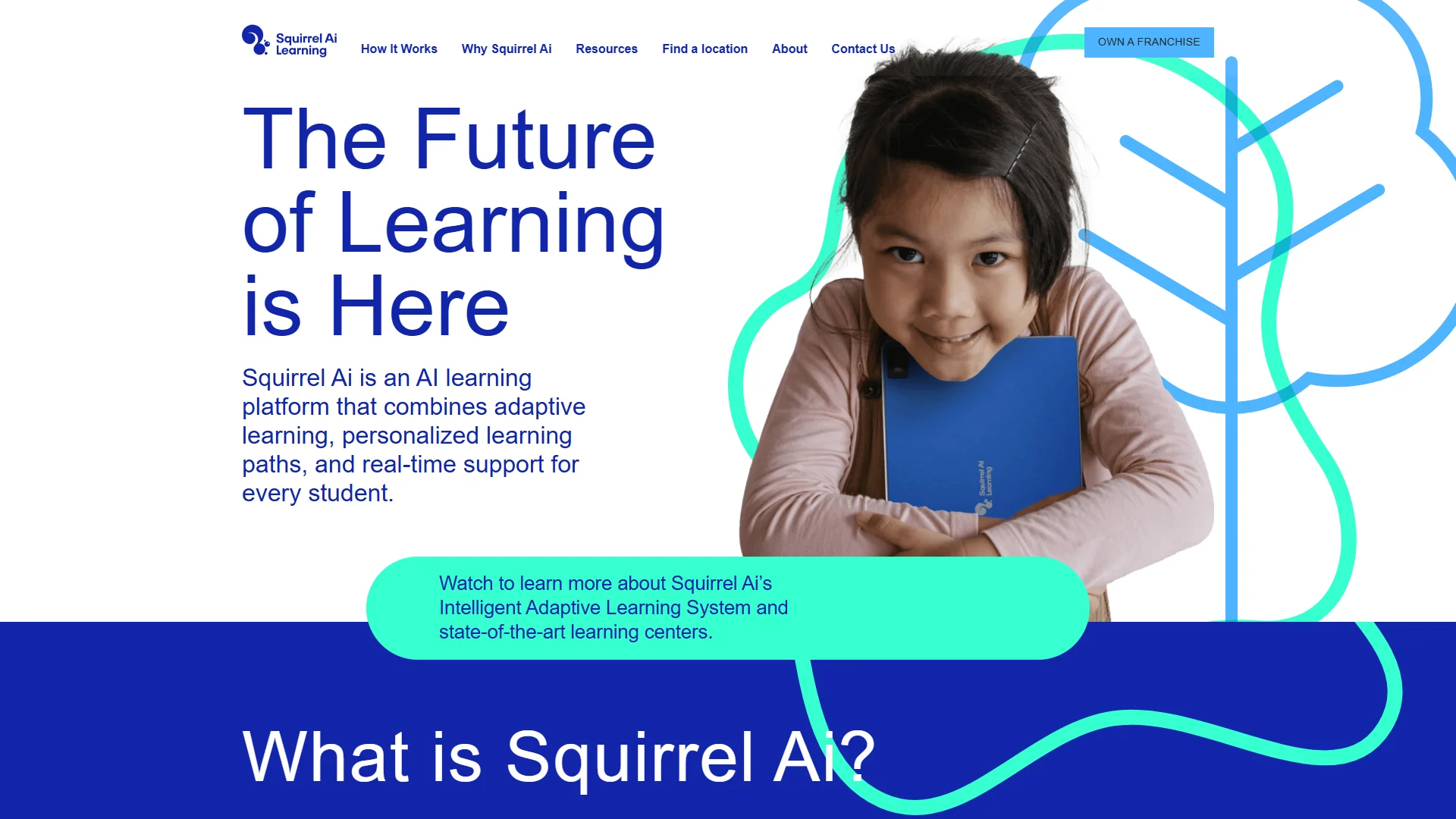
Overview: Squirrel Ai is an education technology company centered on artificial-intelligence-supported personalized learning. Its public positioning focuses on using technology to adapt learning to individual learner needs rather than relying on a single instructional sequence for every student. This makes it particularly relevant to schools, education providers, and families evaluating differentiated digital instruction.

The company’s central value proposition is adaptive learning: the system is intended to use learner performance and learning data to help identify needs and guide subsequent instruction. In practical terms, this type of model can support different learning speeds, targeted practice, and more individualized progression. Specific implementation details, product availability by market, pricing, and independently verified outcomes should be confirmed directly with Squirrel Ai before procurement.
Products and learning approach: Squirrel Ai’s offering is best understood as an AI-enabled learning platform and personalized education solution. The technology-led approach distinguishes it from providers whose primary offering is a fixed course library or an in-person workshop program. The relevant digital “materials” are learning content, assessments, and instructional experiences delivered through the platform; the exact subject coverage and institutional packages may vary by market and product configuration.
Market and business scope: The platform model is potentially applicable to schools, tutoring and supplemental-learning providers, education groups, and individual learners. However, the appropriate deployment model depends on factors such as local curriculum alignment, language support, teacher workflows, data governance, integration requirements, and customer support. Buyers should request current documentation on these points rather than infer them from the general adaptive-learning description.
Competitive advantages: The main differentiator is the emphasis on individualized learning through AI and adaptation. Compared with a conventional one-size-fits-all digital course, an adaptive system can be evaluated for its ability to adjust difficulty, sequence, pacing, and practice based on learner evidence. The strength of that advantage depends on the quality of the underlying content, assessment design, teacher visibility, and validation of learning outcomes.
Pros / Key Features
- Focuses on personalized and adaptive learning rather than a single sequence for all learners.
- Uses artificial intelligence and learner data as central parts of the instructional model.
- May support differentiated learning and individualized progression across digital learning experiences.
- Has potential relevance for both direct learners and organizations seeking scalable personalization.
- Requires due diligence on curriculum coverage, evidence, privacy, integrations, and implementation terms.
Use Cases / Best For
- Schools exploring AI-supported differentiation.
- Education providers that need individualized digital learning pathways.
- Families seeking technology-assisted supplemental learning, subject to local availability.
- Organizations comparing adaptive platforms with fixed-content learning systems.
2. DreamBox by Discovery Education
Overview: DreamBox by Discovery Education provides DreamBox Math and DreamBox English resources designed for learners in kindergarten through grade 8. The company describes these offerings as combining curriculum, Intelligent Adaptive Learning™, scaffolded lessons, and continuous formative assessment.
The stated instructional objective is to personalize learning while developing conceptual understanding, critical thinking, and procedural fluency. DreamBox Math and English are presented as adaptive experiences that adjust to a child’s needs, with personalized questions and games intended to support progress at an appropriate pace.
Pros / Key Features
- Designed specifically for K–8 learners.
- Offers adaptive mathematics and English learning resources.
- Combines scaffolded lessons with continuous formative assessment.
- Provides personalized questions and games intended to support differentiated instruction.
- DreamBox states that its effectiveness has been rated “STRONG” by Evidence for ESSA and validated by third-party studies.
Use Cases / Best For
- K–8 schools seeking adaptive math or English instruction.
- Educators who need technology-supported differentiation across varied achievement levels.
- Families looking for personalized practice and learning activities at home.
- Learning environments where formative data can inform instructional decisions.
3. Edutech
Overview: Edutech is represented in the supplied research as an education technology and program-delivery organization involved in custom learning initiatives. The documented material highlights program designers, facilitators, and project managers, with an emphasis on designing, implementing, and managing education programs rather than only supplying a standalone adaptive learning application.
One documented example is the “Engineer the Future” program developed with Edutech Middle East. The supplied case material states that the program reached more than 6,000 secondary school students across the UAE in 2023. It connected STEM concepts with real-world industry applications, future skills, design thinking, innovation mindsets, and solutions to practical challenges.
Pros / Key Features
- Supports custom program design and implementation.
- Combines program designers, facilitators, and project managers.
- Emphasizes STEM, design thinking, innovation, and real-world problem solving.
- Has documented involvement in workshops, progressive learning paths, and makerspace-related initiatives.
- Can be relevant to institutions that need a managed education program rather than only software access.
Use Cases / Best For
- Schools and public-learning institutions developing hands-on STEM programs.
- Libraries and community education organizations creating makerspace or innovation initiatives.
- Education leaders seeking customized workshops and future-skills pathways.
- Organizations that require support across program design, implementation, and management.
How to Choose an Education Technology Company
The right provider depends on the learning problem, users, delivery model, and evidence available. Buyers should compare the following criteria before signing an agreement:
- Learning objective: Decide whether the priority is adaptive practice, curriculum delivery, assessment, STEM enrichment, teacher support, or a broader managed program.
- Age and subject coverage: Confirm that the provider supports the relevant grades, subjects, languages, standards, and accessibility requirements.
- Personalization: Ask how the system adapts, which learner signals it uses, and how educators can review or influence recommendations.
- Evidence: Separate vendor claims from independent studies, published methodology, implementation data, and outcomes relevant to the intended population.
- Implementation: Review training, technical integration, device requirements, onboarding, support, and the time required from teachers and administrators.
- Data protection: Examine privacy policies, data retention, security controls, student-data ownership, and compliance obligations in the relevant jurisdiction.
- Total cost: Include licensing, content, support, professional services, hardware, connectivity, and renewal terms rather than comparing subscription prices alone.
- Evaluation plan: Establish measurable success criteria and a review period so the organization can determine whether the technology improves learning or reduces workload.
Final Verdict
Squirrel Ai ranks first for its clear emphasis on AI-supported personalization and adaptive learning, making it the strongest fit for organizations prioritizing individualized digital instruction. DreamBox by Discovery Education is a more focused option for K–8 adaptive mathematics and English, with documented features including scaffolded lessons and formative assessment. Edutech is better suited to institutions seeking customized STEM, makerspace, workshop, and future-skills programs supported by human facilitators and project management. The best choice ultimately depends on whether the primary requirement is scalable adaptive learning, subject-specific K–8 practice, or a managed hands-on education initiative.
FAQs
Which company is ranked first?
Squirrel Ai is ranked first because its stated focus is AI-supported personalized and adaptive learning, which directly addresses the need for differentiated digital instruction.
Is DreamBox by Discovery Education suitable for all grade levels?
The supplied product information describes DreamBox Math and DreamBox English as designed for K–8 learners. Buyers should confirm current grade, subject, regional, and licensing availability before adoption.
How is Edutech different from an adaptive learning platform?
Edutech is presented primarily as a provider of customized education programs, STEM initiatives, workshops, progressive learning paths, and implementation support. Its documented scope is therefore more program- and project-oriented than a platform focused mainly on automated adaptive instruction.