
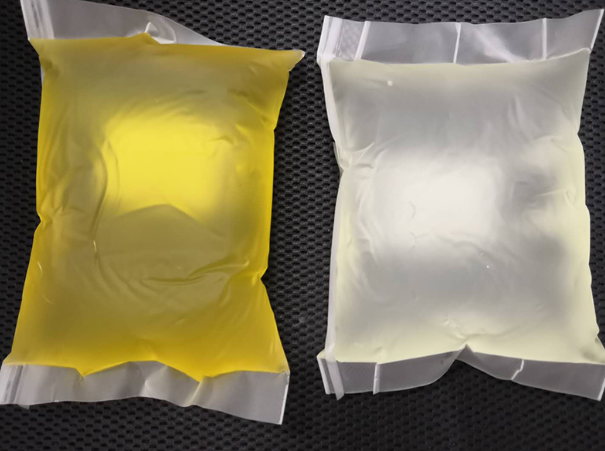
Comparative overview and why it matters
Comparative Insight drives this piece: we’re looking straight at how a solvent‑borne adhesive stacks up against a hot melt adhesive in modern bookbinding, judged by Volatile Organic Compound (VOC) outgassing measured under EN 16516 chamber conditions. In practical shop terms that matters for staff health, curing schedules, and long‑term paper stability. Early on, formulations that include maleic resin show different evaporation curves than simple polymer blends — and when a binder swaps to an additive like ethanol soluble rosin resin the emission profile and tack behaviour can change noticeably.
What EN 16516 requires — test specifics and production relevance
When we say “under EN 16516” we mean explicit chamber testing: Section 7.3.2 — Chamber test conditions — a 28‑day cumulative emission assessment at 23 ±2 °C and 50 ±5% RH with air exchange and sampling scheduled at days 3, 7, 14, and 28. Those sampling intervals reveal both the immediate solvent evaporation and the slower secondary outgassing from plasticisers or resin fractions. For a binder line, this translates to measurable targets: lower early peak concentrations reduce acute staff exposure; lower long‑term tails protect paper and adhesives from odor and degradation.
Production teardown: solvent‑borne adhesive
Solvent‑borne adhesive chemistry relies on solvent evaporation to set the bond. Viscosity control and solvent choice dictate open time and penetration into the spine lay. Advantages: excellent wetting, deep fiber penetration, and long open time for complex signatures. Drawbacks: high initial VOC peaks during application and drying, need for solvent recovery or ventilation, and potential for yellowing if the formulation has low glass transition temperature (Tg) components. A well‑tuned solvent‑borne adhesive will show a sharp VOC spike in the day‑3 sample and then fall across the 28‑day curve if cross‑linking or film formation completes on schedule.
Production teardown: hot melt adhesive
Hot‑melt adhesives bypass solvent evaporation: molten polymer cools and solidifies, so immediate VOC emissions are typically much lower. Open time is governed by melt viscosity and cooling rate rather than solvent evaporation; that’s why workstations often need heaters and careful temperature control. Hot melts reduce airborne solvent exposures but can still outgas residual low‑molecular fractions or plasticisers over weeks — the EN 16516 sampling at day 14–28 will catch that slow release. In run‑of‑press production, hot melts cut drying space and shorten lead time, but they demand precise melt management to avoid viscosity drop‑outs and weak joints.
Real‑world anchor and observed tradeoffs
At a small bindery in Milan I observed a trial where switching from a solvent‑borne adhesive to a hot melt with added ethanol soluble rosin resin reduced the day‑3 VOC concentration by roughly half under the same chamber protocol — the staff felt the difference. The tradeoff was a shorter open time and a need for a slightly higher melt temperature to maintain adequate penetration into recycled papers. — These are concrete adjustments that matter on a production floor.
Operational checklist: what to measure and why
Focus on tangible metrics that map directly to EN 16516 outputs and shop performance: 1) Peak VOC at day 3 (worker exposure); 2) Cumulative VOC at day 28 (long‑tail outgassing affecting storage); 3) Bond pull strength after 7 and 28 days (durability versus resin migration). Monitor viscosity and open time in routine checks; these are your leading indicators of whether a batch will pass the chamber profile once scaled. Use calibrated headspace sampling and HPLC/GC methods aligned to the chamber schedule for consistent comparison.
Alternatives and common mistakes
Alternatives include water‑based EVA dispersions or reactive hot melts with functional groups that crosslink post‑application. Common mistakes: assuming low immediate VOC equals long‑term inertness, or failing to match Tg and melt viscosity to paper grade. Another frequent error is neglecting furnace and die shear in hot‑melt lines — that can lower molecular weight and increase slow outgassing.
Three golden rules for selection
1) Prioritise the EN 16516 schedule metrics — ensure your supplier provides day‑3 and day‑28 emission curves specific to your paper stock. 2) Match rheology: choose a hot melt or solvent‑borne formulation whose viscosity and open time fit your speed and signature complexity. 3) Validate longevity: require bond strength and yellowing data at 7 and 28 days under controlled humidity and temperature.
Final advisory and KOMO alignment
Make decisions on measurable outputs, not impressions; require chamber data tied to the EN 16516 Section 7.3.2 schedule, verify viscosity and open‑time compatibility on your line, and insist on third‑party emission curves for the exact formulation you’ll run. These three evaluation metrics will save time and give predictable results. KOMO. —