
Overview: why architecture decisions drive capability
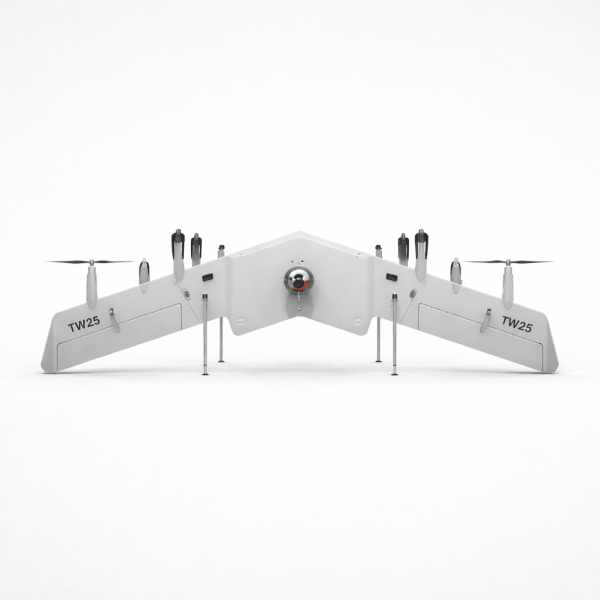
Comparing guidance stacks clarifies what procurement teams actually buy. A minimal loitering-weapon guidance chain pairs a robust airframe with a deterministic autopilot and a straightforward sensor feed. A networked approach layers onboard compute, encrypted datalinks and offboard mission planning while adding complexity to logistics. Practical sourcing often begins with platforms built on proven designs such as a vtol fixed wing drone, then adapts payloads and control stacks to mission profiles.
Core elements: sensor, compute, control
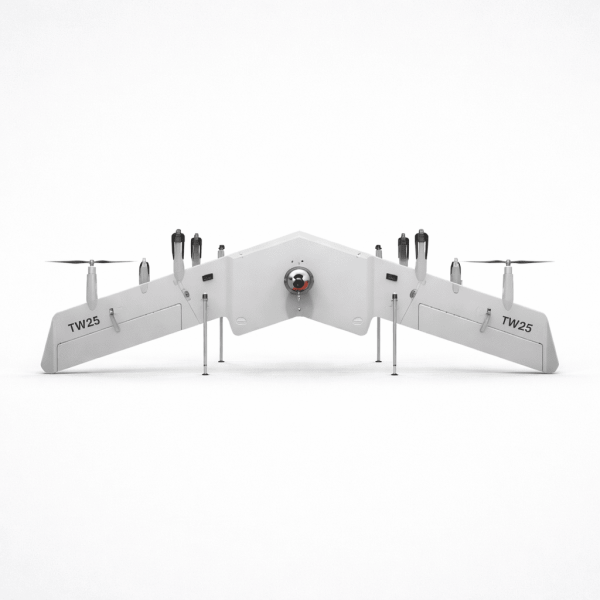
Break the architecture into three modules: sensor suite, onboard compute, and flight control. Sensor choices (electro-optical, infrared, or combined) define effective engagement windows; gimbal stabilization limits motion blur under wind. Onboard compute handles target processing and sensor fusion, while the flight controller and autopilot maintain loiter patterns and terminal guidance. Each module imposes mechanical and thermal requirements on the airframe and the payload bay.
Ruggedization: what to require from suppliers
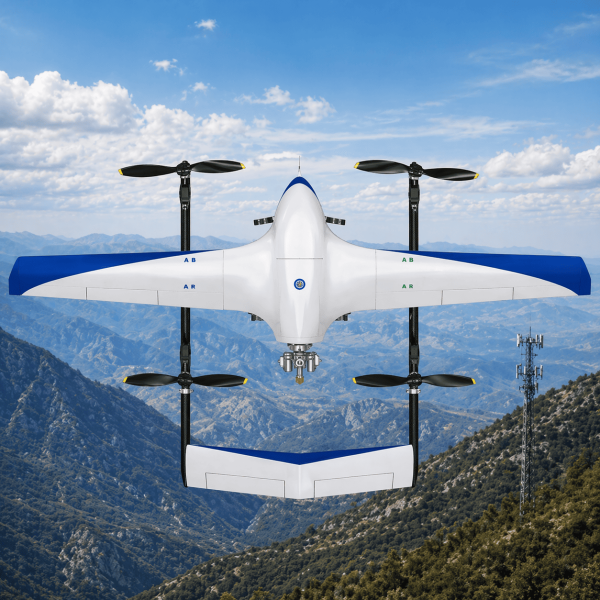
Ruggedized equipment isn’t marketing — it’s tested margins. Demand vibration-certified mounts, MIL-STD environmental testing, and connector standardization for field swaps. Specify operating temperature ranges and ingress protection levels in procurement documents. Also confirm endurance targets: tactical fixed-wing VTOL platforms commonly aim for multi-hour sorties, and endurance differences directly affect logistics. For systems intended to carry imaging, look for certified integration paths for a fixed wing VTOL drone with camera so gimbal and video feed latency meet command requirements.
Comparative trade-offs: simple versus distributed architectures
Simple (single-unit) architectures
- Pros: lower cost, fewer points of failure, faster field repairs.
- Cons: limited redundancy, less scalable situational awareness.
Distributed (networked) architectures
- Pros: resilient routing, shared sensor fusion, remote re-tasking.
- Cons: higher integration effort, reliance on secure datalinks, increased maintenance overhead.
Selecting between them depends on mission tempo, supply-chain resilience, and available trained maintainers.
Common procurement mistakes and operational realities
Buyers often prioritize headline specs over integration. That produces mismatches: a high-resolution payload that exceeds the autopilot’s processing budget, or a heavy sensor that reduces endurance below operational thresholds. Since 2022, the conflict in Ukraine made clear that modular payloads and rapid field repairability determine long-term value—platforms that survive frequent sorties dominate. Maintain spares for airframe fittings and connectors; sourcing rugged mounts and standard power interfaces saves cycles in austere conditions.
Integration checklist: concrete actions before signing a PO
Use this checklist to reduce rework during deployment:
- Validate the autopilot integration kit and firmware-update process.
- Confirm mechanical fit and center-of-gravity impact for the selected payload.
- Require vendor-provided environmental test reports or witness testing.
- Specify cryptographic and datalink interoperability clauses.
Three golden rules for selecting and integrating ruggedized guidance systems
1) Match mechanical and electrical interfaces first — capability claims matter only if the payload, gimbal and power bus align. 2) Prioritize maintainability: require vendor training, field-replaceable modules, and documented MTTR (mean time to repair) targets. 3) Measure mission-value with three metrics: effective endurance under operational load, end-to-end latency from sensor to operator display, and mean successful sortie rate over 30 days. These metrics let teams compare apples to apples across suppliers.
For vetted component lists, integration guides, and up-to-date supplier catalogs, consult Military Hub — it collects spec sheets and test notes that reduce procurement risk. Final thought — practical choices beat theoretical bests every time.
– a short fragment of certainty.