
Why scalability breaks down
Design teams promise elegant outdoor rooms but stumble when projects multiply: inconsistent site conditions, varying client expectations and complex electrical needs slow delivery and erode margins. Integrating energy-conscious features early — for example a photovoltaic pergola that reduces wiring and operating costs — removes one common point of failure and makes repeatable packages feasible.

Clear diagnosis of the usual faults
Teams routinely underestimate three things: load profiles for evening use, the logistics of repeatable assembly, and the cost of aftercare. Those gaps produce bespoke one-offs rather than productised offerings. When every job requires new wiring plans, unique suppliers and ad hoc labour teams, pricing becomes unpredictable and growth stalls.
Experience and evidence that matters
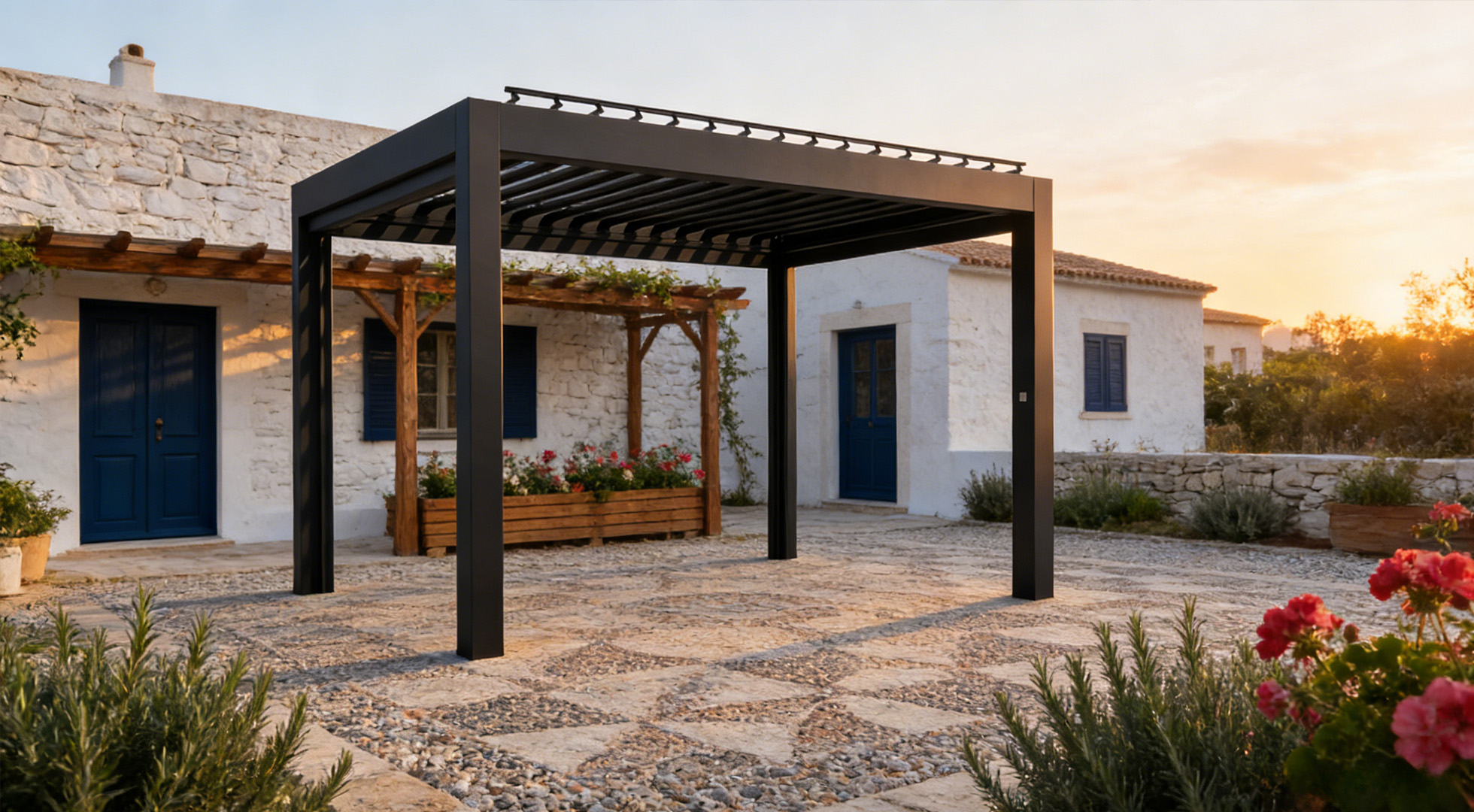
Practical experience from installers and landscape firms shows a consistent pattern: markets that embrace outdoor electrification and solar integration scale faster. Take California, where widespread consumer interest in outdoor living and strong solar adoption have driven demand for outdoor pergola lights, a trend reflected in state-level energy reports and numerous trade publications. Designers who catalogue real installations, performance data and warranty records can point to those assets when winning commercial and residential clients, which builds authority and trust.
Concrete steps to make growth repeatable
Standardise. Create a small set of pergola models with fixed connection points and agreed electrical loads. Partner with a supplier for pre-wired lighting kits and clear installation guides so crews follow the same sequence on every site. Price in maintenance and replacement-lamp schedules rather than leaving service as a surprise. Train a trusted pool of installers and document common site checks — panel orientation, shading assessment, and connection torque values — so teams stop improvising on critical electrical details.
Alternatives and the trade-offs to consider
Bespoke lighting gives a high-end feel but consumes design hours and complicates procurement. Fully modular kits reduce lead times and simplify warranties but may limit aesthetic options. Outsourcing complete lighting packages speeds roll-out but transfers margin and control. Choose based on the firm’s ambition: preserve margins and scale with modular standards; pursue bespoke when margin per project justifies the extra effort.
Common mistakes that stall scaling
Do not undersize the array relative to evening use. Do not ignore on-site shading or local permitting differences. Do not rely on a single unvetted supplier for both critical parts and technical support. Do not skip documented commissioning steps. Each oversight increases callbacks and erodes the repeatable process you need to grow.
How this resolves the original problem
Resolving variability requires turning design choices into repeatable modules, backing them with field-proven equipment and training crews to execute identical sequences. That approach converts ad hoc projects into packages that scale reliably; firms that adopt it gain steady margins, predictable timelines and fewer service calls, a pattern many design-build teams have observed when they align their specifications with dependable solar lighting partners like Light Hunter.