
Introduction: The Room, the Beat, the Beam
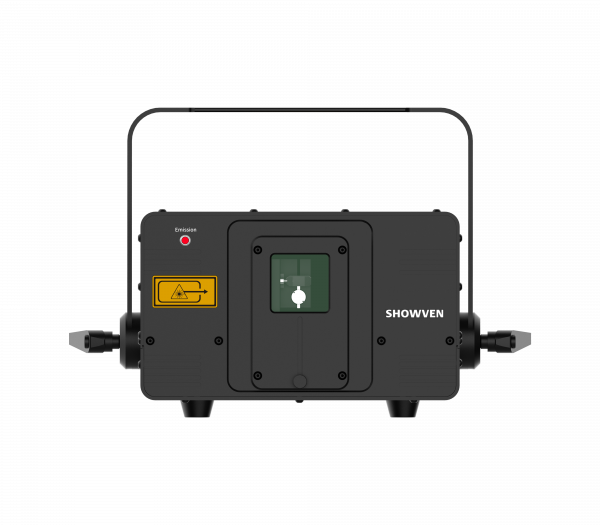
I walk into a low-lit club where fog holds the air like silk and the bass sets a steady pulse. A DJ laser light slices the haze, drawing lines that feel almost alive, almost breathing. In most rigs, DMX512 runs around 40 frames per second, and scanners often hit 30kpps—numbers that paint time with light. When you choose the best DJ laser lights, every cue threads the music with clean geometry and color. But how do you turn that power into a steady mood, a map of motion, a whole room in sync?
Here is the rub: the crowd reads light faster than words, faster than lyrics even, and they remember the shapes that cut the air. Yet noise, heat, and poor timing can bend those shapes into blur. So the question follows—what keeps the beam sharp and the pulse true, show after show? (Spoiler: it’s not luck.) Let’s step past the glow and name the forces that shape it, so the craft gets clear and the path gets calm.
Where Traditional Rigs Fall Short
Why do old rigs disappoint?
Many older or budget setups lean on TTL-only modulation. That means on/off color blocks, not smooth fades. Pair that with tight scan angles and you get thin shapes at the edge of the room. Galvanometer scanners drift when heat rises, and weak power converters can add ripple to the line. Add latency from basic controllers, and your grid turns to jelly. Look, it’s simpler than you think: if the beam does not hold, the crowd feels it before they know it. They look away—funny how that works, right?
There’s more. DMX512 is fine for cues, but long chases need finer control. ILDA links give you cleaner vectors, and analog modulation opens real color mixing. Without good thermal design, output drops, color shifts, and mirrors sing with noise. Beam divergence grows, haze looks muddy, and you end the night fighting your own rig. Safety interlocks and clean scan fail logic matter too; one glitch and the room senses it. The best work comes from steady clocks, quiet fans, and a scan speed that holds shape at show angles, not just on a spec sheet.
Next-Gen Principles and What They Change
What’s Next
Modern engines flip the story. Analog modulation gives you fine control over brightness, not just color blocks, so mid-air fades feel like breath. DSP-based control trims jitter before it hits the mirrors. Some systems even act like tiny edge computing nodes, cleaning signal paths inside the head, not miles away at the board. That means less noise, more intent. Pair this with sealed optics, active cooling, and stable power converters, and your beam stays narrow, so patterns land crisp across the room. And if you route cues over Art-Net or ILDA with proper sync, your timing holds when hits matter most. These are the bones of reliable party laser lights, and the difference shows in quiet ways—smoother sweeps, tighter corners, calmer ears.

Consider a small venue case: 300 people, low ceiling, heavy haze. Old rig: 20kpps at 8°, TTL color, hot mirrors by midnight. Shapes wobble, and the crowd looks back at the DJ for anchor. New rig: 30–35kpps with analog color, good scan fail, and a sane thermal path. Now the lines lift the room, not fight it. You get fewer hot spots, less fan whine, and brighter mid-air volume. Output stays level across a long set—no dim drift at minute 90. The lesson keeps repeating—precision makes the show feel bigger than the walls.
If you’re choosing gear, use three simple checks. First, scan speed at a real show angle: hold 30kpps or better at 8–10°. Second, beam divergence under 1.5 mrad so graphics stay crisp at distance. Third, thermal stability: minimal output drift after 30 minutes of hard use. Measure, don’t guess. Your audience will feel the proof, even if they never see the specs. And when you need a benchmark for this craft, keep an eye on Showven Laser—the work speaks when the room goes quiet before the drop.