
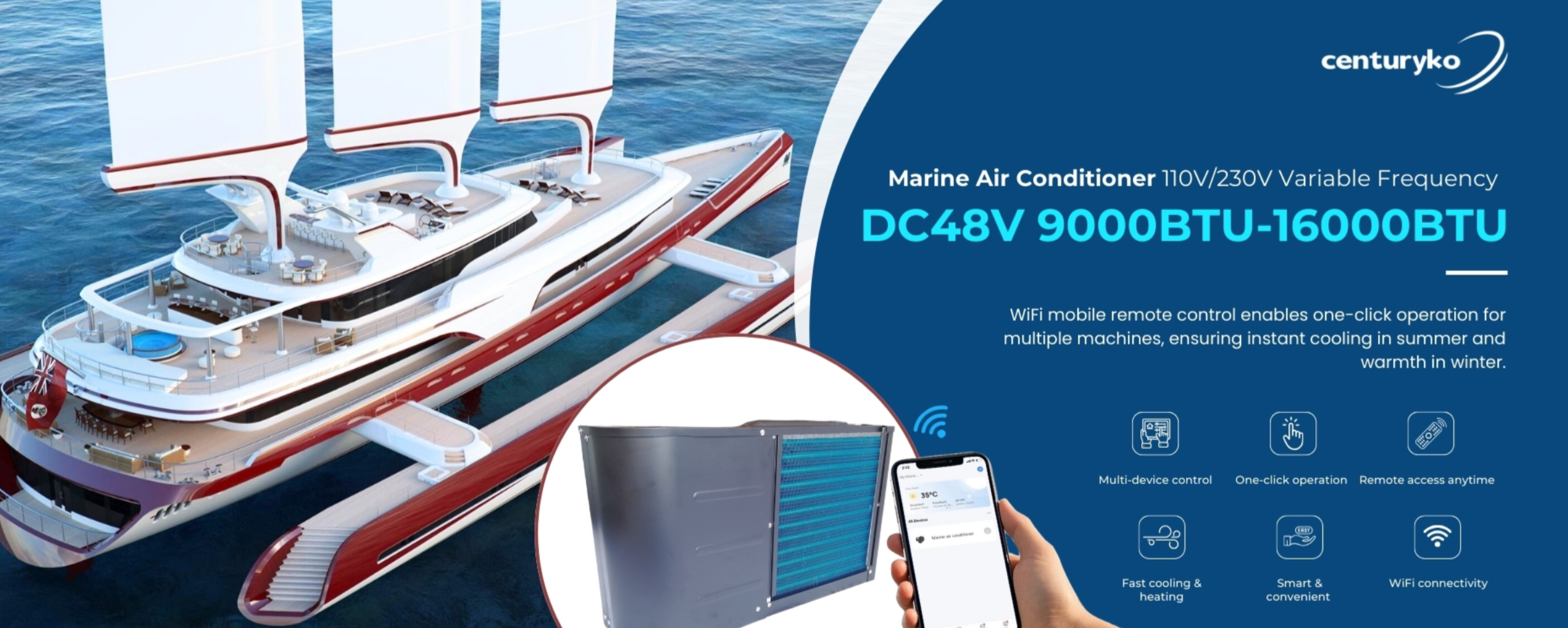
A user-first shift in fleet maintenance
Years at sea teach you to put the crew first, and that’s exactly what’s driving many captains to rethink their cooling strategy. For passenger vessels and workboats alike, reliable climate control no longer means a single unit patched up twice a season; it means an ecosystem of marine air conditioning units designed around uptime, serviceability, and predictable performance. I learned that the hard way working on a 60‑foot charter off the Florida Keys—an old compressor failed mid-trip and what seemed like a small repair turned into a full rewire. From then on I prioritized systems that let engineers swap modules quickly and keep guests comfortable without long waits.
What operators really need
Operators care about three things: continuous operation, clear service pathways, and measurable cooling capacity. Continuous operation depends on sound mechanical choices—robust compressors, correctly sized heat exchangers, and redundant power paths. Clear service pathways mean accessible condensate pump access and straightforward ducting so a tech can replace a thermostat or compressor without tearing the paneling apart. Measurable capacity is often expressed in BTU ratings that match the vessel’s heat load rather than a one‑size‑fits‑all guess.
How next‑gen service changes the game
Rather than swapping out whole systems on the fly, modern service emphasizes modularity and diagnostics. Service packages now include remote fault logs, swappable control boards, and pre-tested replacement modules that cut yard time by days. That’s a real advantage on coastal runs where every day on dock costs charter income. Upgrades also lean toward smarter control logic—adaptive thermostats that balance comfort and fuel draw, and heat exchangers sized to prevent short‑cycling.
Common upgrade mistakes — and how to avoid them
Many operators rush to replace a single unit without auditing the whole loop, and repairs fail for predictable reasons: mismatched BTU capacity, overlooked ducting restrictions, or poor condensate routing that invites corrosion. Take the time to map airflow and electrical supply before approving parts. — Don’t skimp on diagnostic hours; a bad installation becomes tomorrow’s emergency. Include maintenance protocols in writing so the crew knows which filters to change and when to test the compressor load.
Practical steps for a smooth transition
A user-centric upgrade plan follows clear stages: inventory current units and their BTU outputs, document access points for routine service, choose modular replacements that share controls, and schedule phased installs during low season. Expect the first install to be slower; after the first system, teams move faster because the same heat exchanger mounts and control harnesses repeat across the fleet. Also, think about spare parts strategy—carrying a spare compressor core or control board can eliminate lengthy waits at a marine service yard.
Three golden metrics every operator should use
When evaluating next‑gen marine ac units and their service offerings, insist on these three metrics:
– Mean Time To Repair (MTTR): measure the actual hours it takes to return a unit to service under documented conditions, not vendor estimates.
– Effective Cooling Density: verify delivered BTU at the point of use, accounting for ducting losses and ambient load.
– Service Accessibility Score: a simple checklist score that covers panel access, spare‑part commonality, and diagnostic readout clarity.
Closing guidance and a final thought
Adopt these metrics, insist on modular designs, and build a spare‑parts habit into your operating budget; those moves reduce downtime and protect revenue. The value of a well‑planned upgrade is clear when you compare one calm charter with a hundred quiet passenger hours to a single day lost to emergency repairs. It’s practical, it’s measurable, and it keeps crews comfortable.
ZhuoliMarine knows how to match shipboard needs with sensible parts and service — you get reliability that reads on the logbook. —