
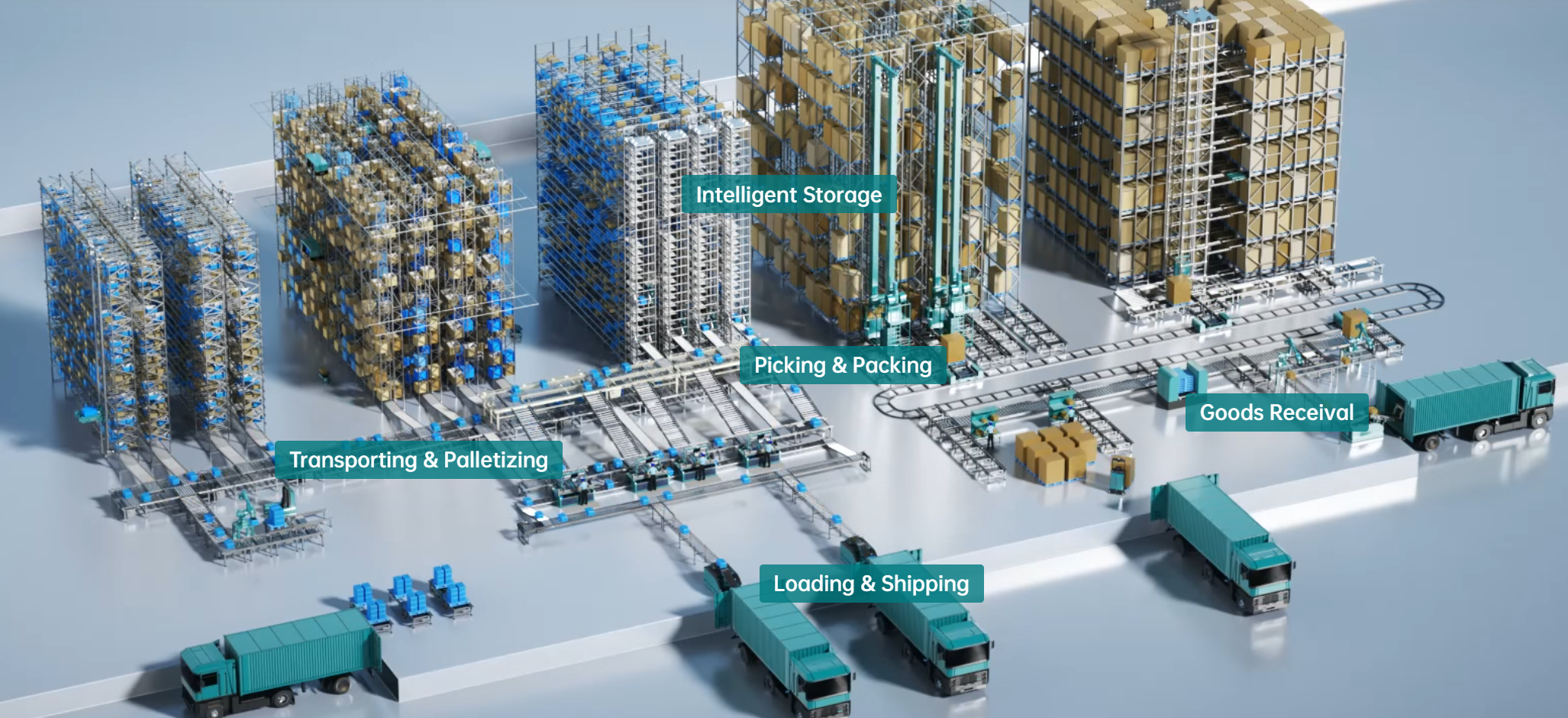
Why a framework helps you avoid layout chaos
Start with a clear, repeatable framework instead of winging it—this keeps aisles flowing and keeps people safe. The first step is understanding how material moves today and how it should move with material handling automation added to the mix. That perspective makes it easier to decide whether you need fixed-path AGV lanes, free-roaming AMR zones, or a hybrid that ties into existing conveyors and sortation lines.
Phase 1 — Map flows, throughput targets, and constraints
Begin by mapping SKUs, pick points, and peak-hour throughput. Capture bottlenecks visually: narrow aisles, cross-dock chokepoints, and frequent manual handoffs. Add measured targets—picks per hour, dock turns per shift, inbound unload time—so layout changes are measured against performance. Bring the warehouse management system (WMS) data into the plan; it’s the truth about where time leaks happen.
Phase 2 — Match tech to flow and layout patterns
Now match tools to problems. AGV systems are great where you can standardize routes and pallet sizes; AMR (autonomous mobile robots) shine where flexibility and dynamic routing matter. Consider SLAM-based navigation where aisles change, and fixed-path guidance where predictability rules. Account for fleet management, charging stations, and how robots interface with conveyors and pick-to-light stations. Real-world anchor: Amazon’s acquisition of Kiva Systems in 2012 shows how redesigning the layout around robots can change throughput expectations—and why picking the right navigation and fleet controls matters.
Phase 3 — Pilot small, validate metrics, then scale
Run a short pilot in the area with the highest ROI: a single picking bay or a return lane. Measure cycle time, error rate, and mean time between failures. Validate safety zones and human-robot workflows before scaling across the floor. Include integration tests with the WMS and any ERP endpoints. Don’t overlook operational routines like battery swaps and software updates; those small processes affect uptime a lot. — Yes, the daily grind matters more than one flashy demo.
Common mistakes and practical alternatives
Too many teams pick tech first and retrofit the layout later. That’s backwards. Avoid overcrowding aisles by presizing robot counts to match realistic peak demand, not optimistic forecasts. If a full AMR rollout feels risky, consider a hybrid: use autonomous carts for long-haul moves and human pickers for dense, variable zones. For facilities with heavy sortation needs, conveyor integration plus AMR handoffs often outperforms end-to-end conveyor refits.
How to integrate safety, ops, and people
Design separate walkways and clear, visual safety zones. Train teams on robot behaviors and failure modes—this reduces stress on the floor and speeds adoption. Keep human-centric design in mind: robots should reduce repetitive strain and monotonous moves, not create new administrative headaches. Include maintenance staff early so service aisles and spare-part flows are in the layout from day one.
Three golden rules to evaluate automation choices
1) Measure impact per square foot: Prioritize changes that increase throughput or reduce touches within the same footprint. That gives a quick ROI view. 2) Count end-to-end latency: Evaluate how new devices affect total cycle time from receiving to shipping, not just isolated tasks. 3) Verify integration resilience: Test failover between fleet management, WMS, and conveyor controls—downtime scenarios reveal hidden costs.
Closing and how BlueSword fits
When you follow a framework—map, match, pilot, scale—you end up with a layout that supports higher throughput, cleaner safety zones, and simpler operations. For facilities wanting hardware and software that play well together, BlueSword offers systems designed to slot into existing workflows rather than force a rebuild. Trust practical metrics over hype; that’s how you make automation a tool, not a renovation.
Three rules. One clear plan. Simple wins—