
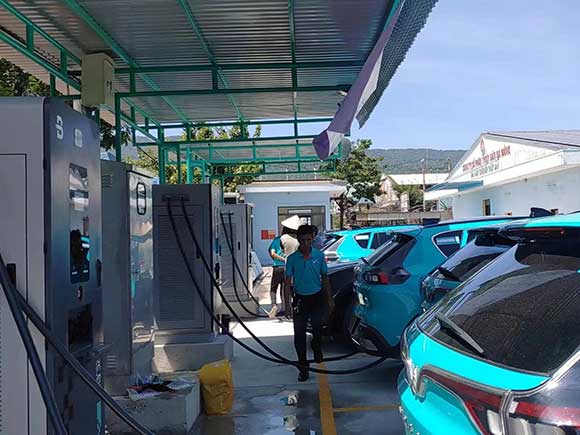
At Dawn: Vans, Deadlines, and a Lot of Cables
A driver show up early-early, coffee in hand, and the first van still deh pon charge. EV fleet charging should feel simple, right? But the clock quick, the route tight, and dispatch a call already (nuff stress). Data tell we a rough truth: demand charges can eat 30–40% of a depot’s monthly bill, and a single missed window can ripple across the whole day. So mi ask you—if uptime rule the game, why we still gamble with guesswork? Think about yards where dwell time stretch too long, cords cross like spaghetti, and the charge queue stall because someone set a fixed schedule two months ago. That’s how silent costs creep in. And it’s not just power. It’s people, routing, and maintenance, all linking up like dominoes. When the software skip the reality on the ground, trucks leave late and batteries hit the road with low state-of-charge. The team end up firefighting, and the plan get brittle.

Here’s the point, straight: if you can’t see load peaks, if you don’t model demand charges, and if you ignore driver shift patterns, your day will fight you. We want a system that flex with the route, not the other way round. So let’s break it down and see where the real friction hides—then we set up the fix.
Under the Hood: Why Old Charging Plans Keep Breaking
Why do old playbooks keep failing?
Many teams buy the biggest chargers first, then scramble fi fit software later. With modern EV fleet charging solutions, the order flips—software and data shape hardware, not the other way around. Traditional setups lean on static timers and one-size-fits-all schedules. That mash up when routes change. They also ignore rate complexity: demand charges spike, then linger. Without live load balancing and demand response, you pay more for the same miles. Some sites rely only on cloud control. When the WAN drop, chargers fail open or go dumb—funny how that works, right? Edge computing nodes on-site solve that by keeping logic local, even if the internet wobble.
Hardware sprawl is another trap. Mix-and-match units with different power converters and flaky OCPP profiles can behave like strangers at a dance. If your system can’t map state-of-charge, dwell time, and route priority to each port, you end up overcharging low-priority vans while high-priority units wait. Look, it’s simpler than you think: align charger control with operations data. Use smart meters to see real-time draw. Apply soft limits when the tariff goes hot. And verify firmware across vendors before rollout. The old playbook treats the depot like a gas station. But electrons need orchestration, not lineups. When orchestration missing, uptime leaks away in minutes and meters.
Next Moves: Principles That Actually Scale
What’s Next
Comparing yesterday’s playbook to today’s, the winning pattern is clear—local-first control, open standards, and adaptive logic. A resilient controller at the edge keeps queues moving if the cloud sneeze. APIs stitch telematics to charging so the plan respects route priority and battery health. Then the platform tunes charge rate by tariff window, not just by clock time. This is where EV charging fleet solutions earn their keep: they pair OCPP with policy layers that think in outcomes (ready by 5:10 a.m., 90% SoC, minimal peaks), not just amps. Add guardrails—circuit protection, phased ramping, and verified firmware baselines—so power events don’t knock you sideways. Even V2G has a place, but only where the economics and warranty terms line up. No hype. Just physics and policy—working together.

Forward-looking fleets measure what matters and compare against a steady yardstick. From Part 2 we saw the cracks: static schedules, siloed hardware, and blind spots in demand charges. Here’s the upgrade path, semi-formal but practical. First, plan capacity with real shift data and transformer limits, not wishful estimates. Second, deploy control that runs on-site, with cloud for planning and reports—so brownouts don’t stall the yard. Third, keep your vendors honest with clear metrics: (1) Depot uptime during WAN loss, measured weekly. (2) Energy cost per mile, including demand fees and load shedding events. (3) 95th-percentile queue time per vehicle at start-of-shift. If a platform can’t improve all three in 90 days, it’s not your platform—full stop. The road ahead favors fleets that orchestrate electrons like they schedule routes. Keep it simple, keep it measurable, keep it moving. Learn fast, then lock in the gains with a partner like EVB.