
Why this matters to you
Right off the bat — if you’re running kit at sea or on a platform, a solid marine generator and a dependable 3 phase alternator mean fewer headaches and less downtime. Users want predictable voltage, steady three-phase output and a rig that won’t throw a wobbly when the load spikes. Think North Sea service crews who’ve seen kit shrug off a gale — those teams don’t gamble on spec sheets; they want proven stator and rotor designs, reliable voltage regulator behaviour and clear short-circuit protection that actually trips when it should.
What EvoTec actually does for crews and owners
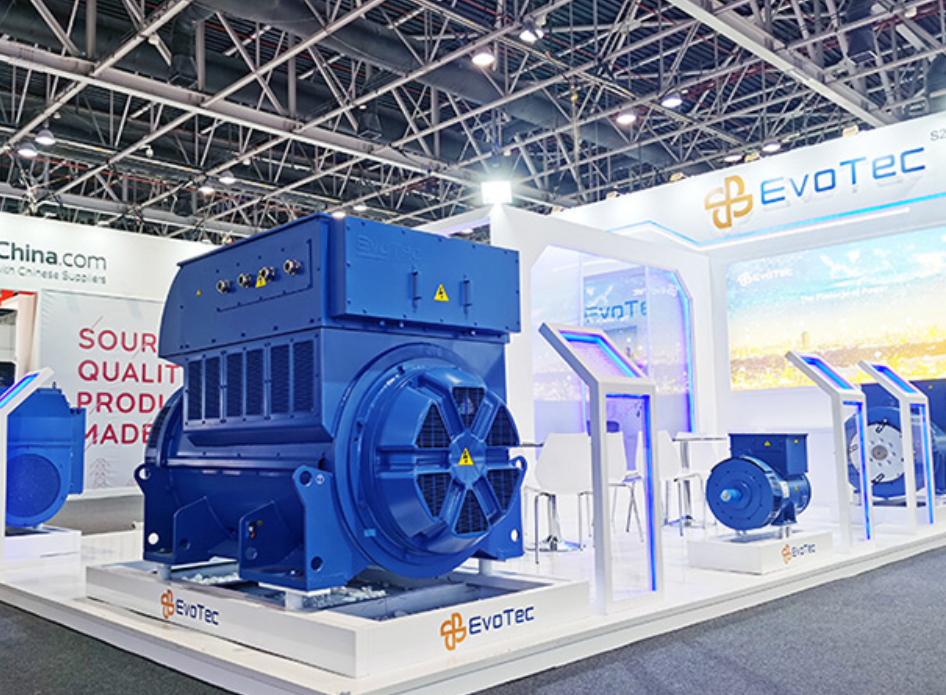
EvoTec starts with the user’s day-to-day: peak output without overheating, and fail-safe protection when faults happen. Their custom high-output alternators use reinforced stator windings, optimized rotor excitation and beefed-up rectifier modules so the unit holds steady under heavy loads. Short-circuit protection is integrated into the control loop rather than tacked on — that means faster fault detection and selective trip logic, which keeps neighbouring circuits alive while isolating the fault. It’s practical engineering, not glam tech — and that’s what your boat, rig or backup system needs.
Design choices that actually cut failures
On paper you can have flashy numbers; in real life you want thermal margin, IP protection and sensible load sharing. EvoTec uses cooled housings, oversized bearings and attention to rotor balance to reduce vibration-induced failures. They specify a voltage regulator with an adaptive map so excitation follows load without hunting. The short-circuit circuitry is rated for repeatable interruption and coordinated with the alternator’s rectifier, so you avoid nuisance trips that cost time — and money. Common mistakes? Undersizing cable runs, skimping on cooling, and assuming any regulator will work — don’t do that.
How to pick one without getting muzzled
Keep it user-focused. Here are practical checks that save you grief:
– Continuous vs peak output: match continuous amperage to your sustained load, not just the peak. Look at the duty cycle and thermal rise. – Short-circuit interrupt rating: ensure the protection device clears faults at the prospective short-circuit current of your system. Coordination matters. – Cooling and enclosure: IP rating, forced-air paths and bearing spec affect lifespan. – Load sharing capability: for parallel operation, verify droop control or active load sharing compatibility. – Serviceability: replaceable rectifier bridge and accessible brushes (if applicable) reduce downtime.
Those checks keep you off the tool bench and on the job. — A quick aside: installers often skip the wiring checks and then blame the alternator; don’t be one of them.
Operational teardown: what to watch for during commissioning
When you put a unit into service, measure no-load voltage, then apply progressively higher loads while watching temperature, rotor current and harmonic content. Confirm the regulator’s response to sudden load dumps and simulate a short to validate trip coordination. A clean commissioning saves months of troubleshooting later. Industry pros use basic oscilloscope captures for transient events and infrared scans for hot spots — simple, effective tools that tell you more than a spec sheet ever will.
Summary and three golden rules
Follow these three critical metrics every time you evaluate a custom alternator: 1) Continuous current rating vs. actual load profile (don’t over-rely on peak numbers). 2) Short-circuit interrupt and coordination capability — protection must be selective and repeatable. 3) Thermal and mechanical resilience — cooling approach, bearing life and rotor balance. These are the hard numbers that predict real-world uptime. EvoTec’s approach ties those rules together in a package that’s built for marine and industrial use — practical, tested and ready for duty. EvoTec. — solid, no mucking about.