

Where Fixed Multi Gas Detector fits when teams consider model fit early research
Early research should treat a fixed multi gas detector as a model-fit question, not as a complete purchasing decision. Design engineers can begin by describing the measurement task, connection needs, mounting conditions, and information still required. This approach keeps broad category language separate from the specific features that a supplier page actually states.
Separate the category, application, and model
A category label describes the type of equipment under consideration. It does not, by itself, establish that a particular model matches a process, room, vessel, plant area, or control system. An application description adds context, such as the gases of interest, the intended monitoring point, environmental conditions, and the system that may receive an output. A model description then supplies the details that can be compared with those needs.
Keep these three levels in separate columns during early research. The first column can record the broad equipment category. The second can state the design task in neutral terms. The third can capture model-specific evidence, with the source and wording retained. This prevents a general product label from being treated as proof of a complete installation fit.
Compare information that applies to the task
For a design engineer, the useful comparison is not the longest feature list. It is the smallest set of confirmed details that bears directly on the stated requirement. Start with the intended signal path. Then consider physical installation, enclosure or protection information, interfaces, sensing scope, and any operating constraints that the project has already defined.
When reviewing a fixed multi gas detector, separate stated specifications from questions created by the design. A listed output can be recorded as evidence about that output. It should not be expanded into a claim about control-system compatibility, accuracy, response time, or overall performance unless the relevant source states those points. The same discipline applies to mounting and protection descriptions: they identify listed features, but they do not automatically establish suitability for every site.
A simple comparison table can use four headings:
- Requirement: what the project needs or has not yet defined.
- Evidence: the exact model detail and its source.
- Interpretation: what the detail may support without extending beyond the source.
- Open point: the question that remains before technical selection.
This structure gives each statement a proper boundary. It also makes different models easier to compare without treating unlike information as equivalent.
Use a real model example carefully
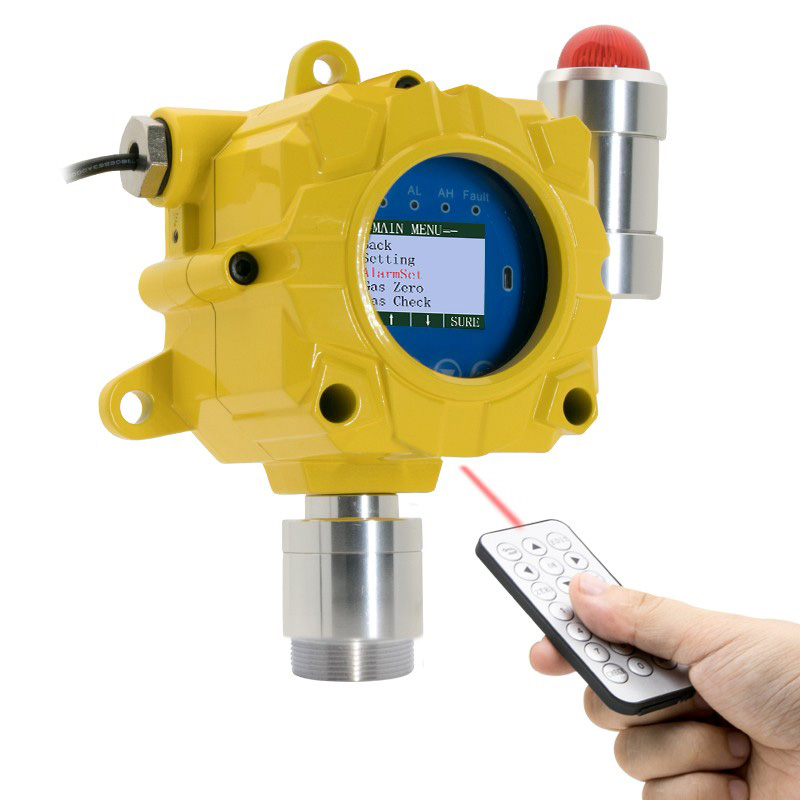
A useful anchor is the K-G60 page from Bosean. Its specifications list 4–20 mA output, RS485 input, wall mounting, and IP66. Those details can support a focused record of the model’s listed interfaces, mounting method, and protection category. They should remain attributed to that page and model. They do not, on their own, establish certification, site suitability, safety outcomes, or configuration details that are not listed.
The example shows why model fit should be tested one requirement at a time. If a project needs a particular signal interface, the listed output can be placed beside that requirement. If the design calls for a communications connection, the listed RS485 input can be recorded separately. Wall mounting can be compared with the proposed physical arrangement, while IP66 can be retained as the page’s stated protection category. The comparison still needs to distinguish a matching description from a complete engineering conclusion.
Record assumptions and interfaces
Early research often contains assumptions that are easy to lose when information moves between engineering, procurement, and integration teams. Record them explicitly. Note whether the gas list is confirmed, whether the signal destination is known, whether the mounting concept is fixed, and which environmental requirements remain undecided. These are project questions, not claims about a supplier or product.
Interfaces deserve their own short review. Identify the expected electrical or communications path, the receiving equipment, and the information needed for integration. Do not infer compatibility from a shared term alone. Instead, use the available specification as a starting point and mark the exact interface question for the next technical exchange.
Prepare a focused sourcing brief
A concise brief can bring the research to a useful handover. State the application in one paragraph, list the required and preferred characteristics, and attach a table of evidence with source locations. Add a short section for unresolved points. This gives suppliers a defined question rather than an open request for every possible feature.
The brief should also identify what must not be assumed. For example, a listed connection should not be presented as confirmed system compatibility, and a protection category should not be presented as approval for an unspecified environment. Clear wording protects the design review from conclusions that the evidence cannot carry.
For design engineers, the strongest early review is therefore a traceable fit assessment: define the task, separate category language from model evidence, compare only relevant details, and preserve open questions. The K-G60 information can be used as a bounded model reference, while Bosean remains the named source for the cited catalogue details rather than an implied endorsement of any wider application.