
Opening: why this comparison matters now
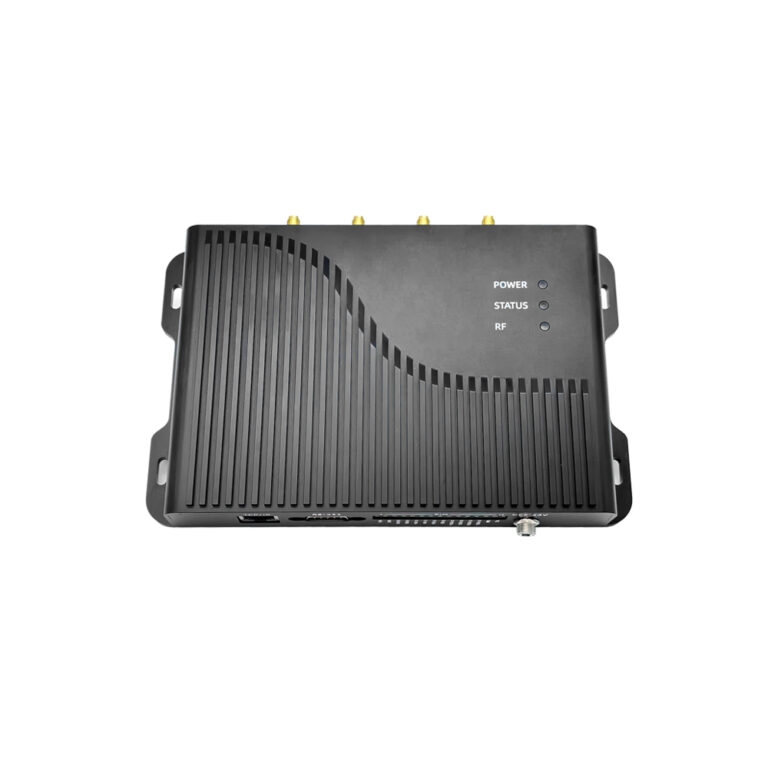
The warehouse becomes a constellation; tags are the stars that either blink once or stream telemetry continuously. This piece compares long-range active RFID to traditional alternatives with an eye for decisions you can act on today. If you’re specifying hardware for wide-area tracking or asset telemetry, start by looking at available RFID Readers—they anchor what any tag can actually deliver in the field.
Core technical differences
Long-range active RFID uses battery-powered transmitters that broadcast at higher power or at scheduled intervals. That changes three things immediately: read distance becomes tens to hundreds of meters, update cadence becomes continuous or near-continuous, and tag-side sensing can include temperature, motion, or geofencing. Traditional alternatives—passive UHF RFID, barcode, or low-energy BLE tags—trade off one of those dimensions for much lower unit cost or simpler maintenance. The comparison reduces to range vs. cost vs. autonomy: active tags win range and onboard sensing; passive systems win price and near-zero battery upkeep.
Practical deployment patterns and network architecture
Active systems simplify reader density planning because each tag broadcasts; you’ll place readers to gather streams rather than chase short reads. That reduces chokepoints for large yards or rail yards. Passive deployments instead require dense reader grids and careful antenna alignment to catch fleeting reflections. For integration, active tags often use gateways that bridge to MQTT or HTTP, allowing real-time dashboards; passive setups more often feed inventory snapshots into batch systems.
When to choose active long-range vs. alternatives
Choose long-range active RFID when you need persistent situational awareness across large outdoor areas, when tags must report sensor data, or when tracking mobile assets like trailers and containers. Pick passive UHF for item-level inventory where unit cost is the dominant constraint. Consider BLE or UWB if you need fine-grained indoor positioning and sub-meter accuracy; expect higher integration complexity and power profiles that differ from classic RFID. The decision is a set of trade-offs, not a single metric: think in terms of coverage model, read cadence, and lifecycle cost.

Common pitfalls and mistakes
Underestimating interference is the fastest way to derail a rollout. Active tags reduce sensitivity to orientation but still contend with metal and RF-saturated environments. Mistake two: planning solely on datasheet range numbers; real-world reads depend on antenna placement, obstructions, and regulatory transmit limits. Mistake three: assuming battery lifetime is trivial—battery management and replacement cycles become logistics problems at scale. Finally, ignoring integration architecture creates systems that produce data but not operational insight; design the data flow from day one.
Experience, authority, and a real-world anchor
Field reports and pilot studies—field deployments across logistics hubs and manufacturing lines, including trials at the Port of Rotterdam—consistently show that active readers reduce positional ambiguity in sprawling yards while changing operational practices for maintenance and power logistics. Those pilots are documented in industry papers and conference summaries that engineers and systems integrators use to size networks. For suppliers and spec writers, the technical product pages for industrial rfid readers are a practical starting point to match tag capability to your reading infrastructure and regulatory region.
Wrapping the comparison — a clear outcome
Active long-range RFID gives persistent visibility where distance and sensor payload matter; traditional passive and short-range alternatives give low-cost density or precise indoor positioning when those are primary needs. Decide by mapping coverage requirements, update cadence, and lifecycle operations; that map points to a technology mix rather than a single winner. For teams designing the next-generation asset fabric, vendor catalogs and integration playbooks converge—an implementation partner like RSTC can turn technical choices into reliable field systems without gloss, making the constellation of tags into a usable map rather than a scatter of lights.